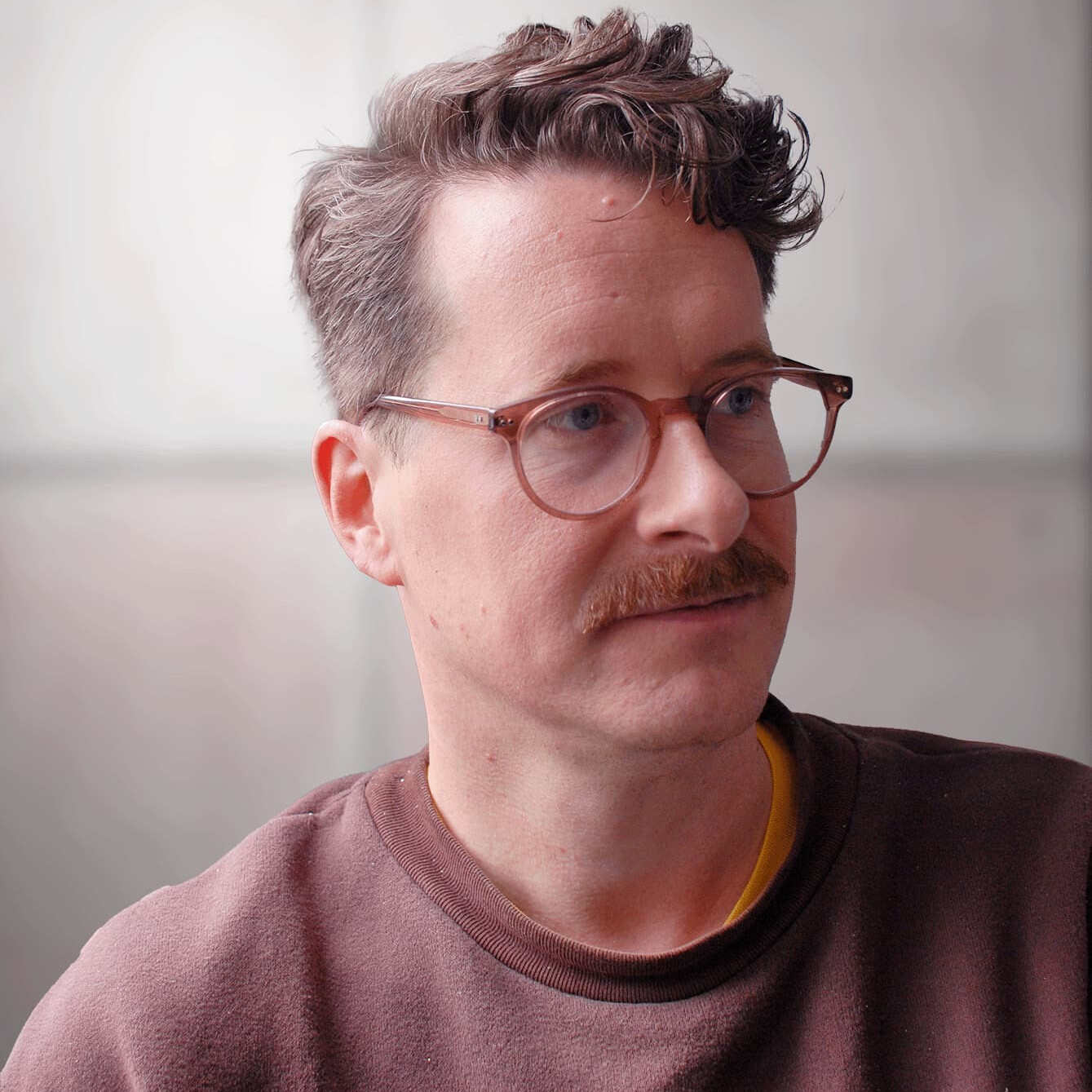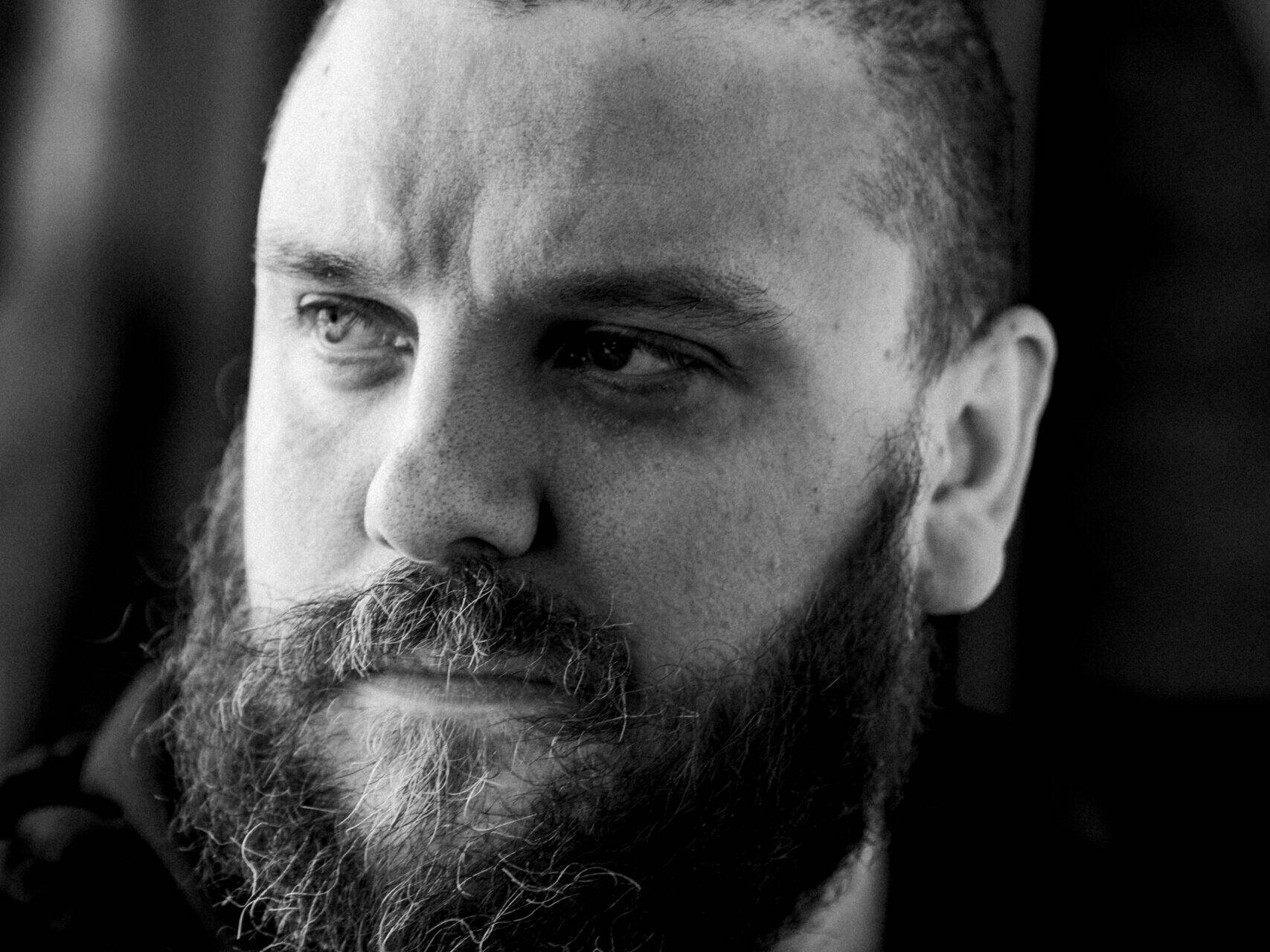
ABOUT RADIM MALINICRadim Malinic is a Czech-born, UK-based graphic designer, author, and speaker who runs the creative agency Brand Nu and hosts a podcast built around his philosophy of Daring Creativity. He is the author of several books, including Creativity for Sale and the Book of Ideas series, and is publishing a trilogy of books beginning with Daring Forever.
Tune in wherever you get your podcasts /
Tune in wherever you get your podcasts /



Episode Description
This is the third Captn OffScript bonus, and it comes from the part of my conversation with Radim Malinic that I deliberately kept back.
When Radim and I recorded his main episode, we spent most of it on his story: the burnout, the therapy, the philosophy he built out of all of it. But near the end I brought up something I’d noticed reading the sample of his new book, how much of it is about fear. Fear is, in a way, the opposite of daring. The conversation that followed was good enough, and useful enough, that I wanted it to stand on its own.
So here it is. It’s short, and it’s the most reassuring thing I’ve put out in a while.
You can’t unlearn fear
Radim started somewhere I didn’t expect. He told me he used to think fear was something you could unlearn, that you could simply get rid of it if you worked hard enough at it. And then he realised you can’t. Fear isn’t a fault in the system. It’s the system doing exactly what it was built to do.
For me, daring was never about conquering fear or making it disappear. It was about knowing the fear is there and doing the thing anyway. Radim took that idea and explained the biology sitting underneath it.
The sabre-tooth tiger in your head
Here’s the part I keep coming back to. We’ve been hardwired by evolution to look out for things that could kill us. Fear is the mechanism that scans your surroundings and keeps you alive, and it worked brilliantly for a very long time.
The problem is that the wiring hasn’t changed, but the threats have. When you think about sharing your work with a thousand strangers, Radim said, your body runs the exact same programme it would run if it heard a sabre-tooth tiger rustling in the leaves. Same mechanism. Same biological systems. Same flood of fear. Your nervous system genuinely cannot tell the difference between posting your portfolio and being hunted.
Once you understand that, the fear stops feeling like a verdict on your work and starts feeling like what it actually is: an old alarm going off in a situation it was never designed for.
Built for survival, living in an era of pleasure
Radim’s bigger point is that we were built for pursuit and survival, and we now live in an era of pleasure and quick rewards. Things have become easy in every direction. With creative AI especially, you can make almost anything without applying yourself and without the difficulty.
But the reward chemicals, he said, only come after the pursuit. The sense of having done well arrives on the other side of something hard. If you skip the difficult part, you skip the payoff. Our bodies haven’t caught up with how easy everything has become, and a lot of the restlessness people feel is that mismatch.
Real risk and the risk your body invents
One distinction stuck with me. There’s the spur-of-the-moment risk, the genuinely dangerous, reckless kind. And then there’s the thing that looks risky from the outside but that someone has quietly spent five years preparing for. They aren’t the same, even though your fear treats them as if they are.
Fear, Radim said, is only a sensation. An emotion. It can paralyse you and stop you doing things, but it can also be exercised and lessened, which is why therapy works, why practice works, why acceptance works. You feel the fear, you do the thing, and most of the time you realise it came to nothing. That realisation, repeated, is the work.
Is the tiger actually coming?
That’s where he landed, and it’s the line I’d want anyone listening to keep. When you’re in the moment, frozen, certain you’re not good enough, it’s worth asking the simple question: is the sabre-tooth tiger actually coming? Because most of the time, it isn’t. And sometimes you’re not afraid of the work at all. You just haven’t slept, or you’ve not looked after yourself, and your body has turned the alarm up for reasons that have nothing to do with the task.
It reminded me of The Dip by Seth Godin, where he writes about the same biological hangover from when we lived in caves. Knowing it doesn’t switch the fear off. But it does let you hear the alarm, check the bushes, and carry on anyway.
Why this is a bonus
Radim’s main episode is about his life. This one is more like a tool, the kind of conversation you can come back to the next time you’re about to put something into the world and your whole body is telling you not to.
The tiger almost certainly isn’t coming. Share the work.
— Alen
Bonus 003 is the third bonus episode of Captn OffScript. It’s the part of the conversation between host Alen Kapetanovic and designer and author Radim Malinic from Season 2 Episode 34 that focuses entirely on fear: why you can’t unlearn it, why your brain treats sharing your work like an ancient survival threat, and how to tell the difference between real risk and the fear your body invents. The episode is released to Captn OffScript newsletter subscribers first, then made public a week later.
Bonus episodes go to newsletter subscribers first as a way of thanking the audience that has chosen to be closer to the show. The bonus goes out as a private YouTube link in the Captn OffScript newsletter, and a week later becomes public on YouTube and is published on all podcast platforms.
Radim explains that human fear evolved to protect us from physical threats, and that the wiring hasn’t changed even though the threats have. When you share your work with strangers, your nervous system runs the same response it would to a predator in the bushes, because it can’t tell the difference. His point is that the fear is an old survival alarm misfiring in a modern situation, and that most of the time, the “tiger” isn’t actually coming.
Future bonus episodes are sent to Captn OffScript newsletter subscribers first as a private YouTube link, then released publicly on YouTube and podcast platforms a week later. Subscribers can sign up at captn.myflodesk.com/newsletter.