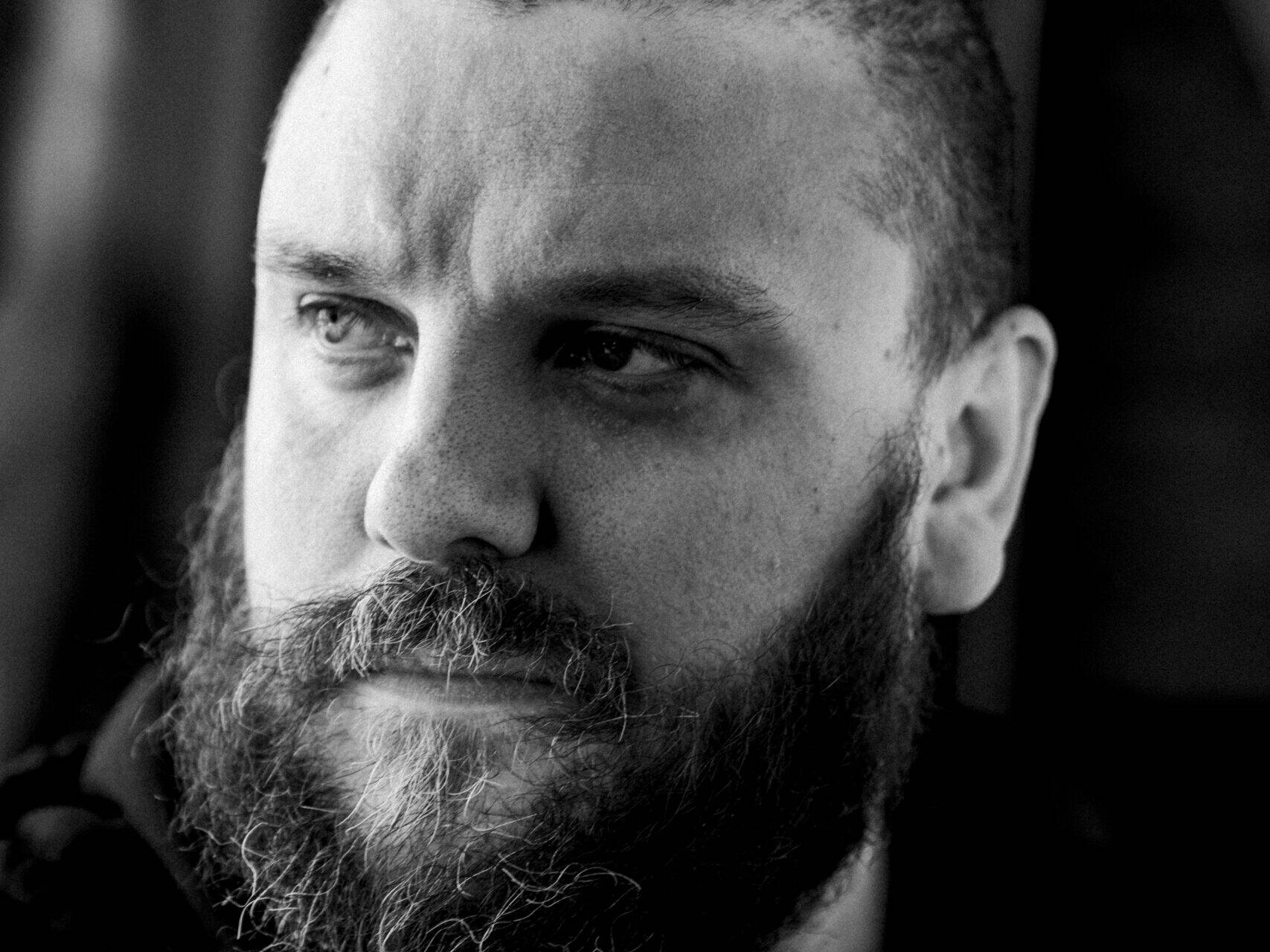
ABOUT TERESA FERREIRATeresa Ferreira is a Portuguese-born, London-based creative director and the founder of Ferrgood Studio. She was raised partly in Lisbon and partly in Macau, came into design through archaeology and illustration, spent seven years at the Financial Times as head of design, and now runs her own studio focused on building sustainable, timeless brands.
Tune in wherever you get your podcasts /
Tune in wherever you get your podcasts /



Episode Description
This is the fifth Captn OffScript bonus, and it’s the part of my conversation with Teresa Ferreira that I wanted to give room to breathe: imposter syndrome, self-worth, and why the numbers we all check every morning have nothing to do with how good we are.
It’s a subject Teresa is genuinely passionate about, and it’s one I know from the inside too. So we sat in it for a while.
It doesn’t go away
The first thing Teresa wanted to say is the most reassuring, and the most honest: imposter syndrome doesn’t go away. Not with success, not with experience, not with time. What changes is that you get better at spotting it. I told her I’ve been doing this seventeen years, and every single time I sit down to draw letters for a new typeface, the same voice arrives, this isn’t going to be good enough, is it even worth publishing. She’s had a big career over many years, and it’s still there for her too. We both agreed it’ll probably still be there in thirty or forty years, because you don’t really get rid of it. You just learn to work alongside it.
Whose voice is that?
Teresa’s tool for catching it is a question I’ve been repeating to myself since: whose voice is that? Because when that critical voice shows up, it’s almost never yours. It’s usually something someone said to you at some point growing up that made you believe something untrue, something you’ve since disproved time and time again. Naming the voice, realising it isn’t you and isn’t accurate, is how you take its power away. She’s passionate about demystifying imposter syndrome and, more than anything, normalising it, because so few people admit how universal it is.
The other half of the reframe is failure. Part of quieting the voice is telling yourself the truth: you have the experience, you know what you’re doing, and if a project fails, that’s okay too. The world doesn’t fall apart if you fail. Holding that lightly is most of the work.
Why creatives do this to themselves
Teresa put her finger on why this hits creatives so hard. We pour our self-worth into our work in a way that isn’t really fair to us. She had a brilliant way of showing how strange it is: nobody who looks after trees stands there thinking they don’t deserve to be near a tree if it doesn’t grow. Nobody who fits roofs decides they’re worthless if one leaks. But creatives do exactly that, because the work comes from somewhere deep and personal, and because it’s part of our identity.
And there’s a trap on top of that. The work isn’t just who we are, it’s how we make money. So the logic quietly becomes: if I’m not making money from it, I must not be good, and if I’m not good, I’m not good enough. Teresa’s point is that we have to reformat that in our heads. Success and financial compensation come from a hundred different factors, many of them completely outside your control. Tying your worth to any of them is a mistake.
The numbers don’t measure you
This is where it got personal for me. I told Teresa the truth, that I wake up most mornings and check my statistics before I’ve done anything else. How many listens overnight. Any new followers. Any new subscribers. We’ve been taught that those numbers measure our value, and they simply don’t. I’ve met people with two thousand followers, which next to the millions some accounts have can feel like nothing, who’ve figured out that the number has no bearing on how good they are. There’s no follower count, and no earnings figure, that measures the value you actually provide.
Teresa agreed, and she was refreshingly honest that she does it too. Everyone checks their metrics. Everyone has the moment of, wait, have I lost a follower, what happened. But we really do have to stop, because it’s distracting us from the important work, the work that’s actually more fulfilling than the number ever could be. So much of what’s happening in the world has zero connection to how good we are, and yet we let a dashboard hand out our sense of worth every morning.
Why this is a bonus
Teresa’s main episode is about her path, her studio, and learning to slow down. This one is the quieter, more vulnerable conversation underneath all of it, the stuff two people who’ve been doing this for years admit to each other when the pressure’s off.
If you’ve ever refreshed your stats before you’ve had a coffee, or felt like a fraud after years of proof that you’re not, this is the one to keep. Whose voice is that? Almost certainly not yours.
— Alen
Bonus 005 is the fifth bonus episode of Captn OffScript. It’s the part of the conversation between host Alen Kapetanovic and creative director Teresa Ferreira from Season 2 Episode 36 focused on imposter syndrome and self-worth: why imposter syndrome never goes away, how to catch it by asking “whose voice is that?”, and why social media numbers and earnings have nothing to do with your value. The episode is released to Captn OffScript newsletter subscribers first, then made public a week later.
Bonus episodes go to newsletter subscribers first as a way of thanking the audience that has chosen to be closer to the show. The bonus goes out as a private YouTube link in the Captn OffScript newsletter, and a week later becomes public on YouTube and is published on all podcast platforms.
Teresa Ferreira uses the question “whose voice is that?” as a tool for catching imposter syndrome. Her point is that the critical voice is almost never your own. It usually traces back to something someone said to you growing up that made you believe something untrue, something you’ve since disproved. Naming the voice and recognising it isn’t accurate is how you take away its power.
Future bonus episodes are sent to Captn OffScript newsletter subscribers first as a private YouTube link, then released publicly on YouTube and podcast platforms a week later. Subscribers can sign up at captn.myflodesk.com/newsletter.