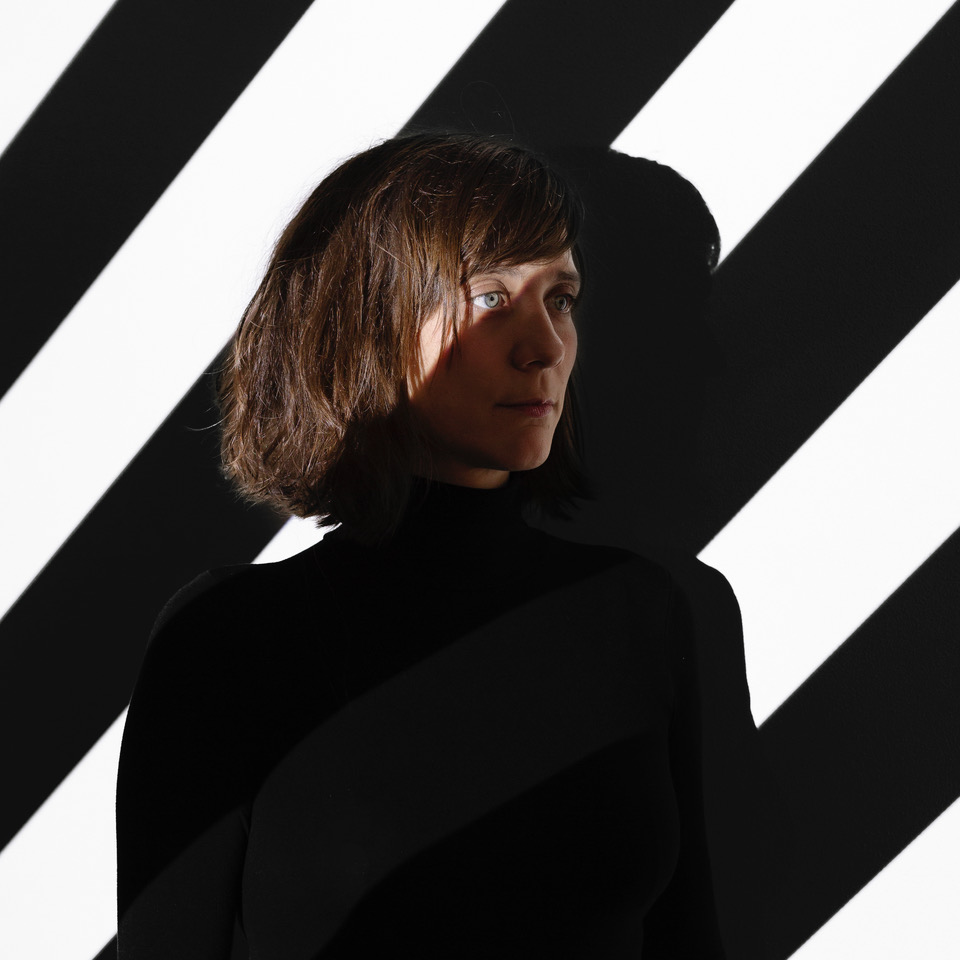
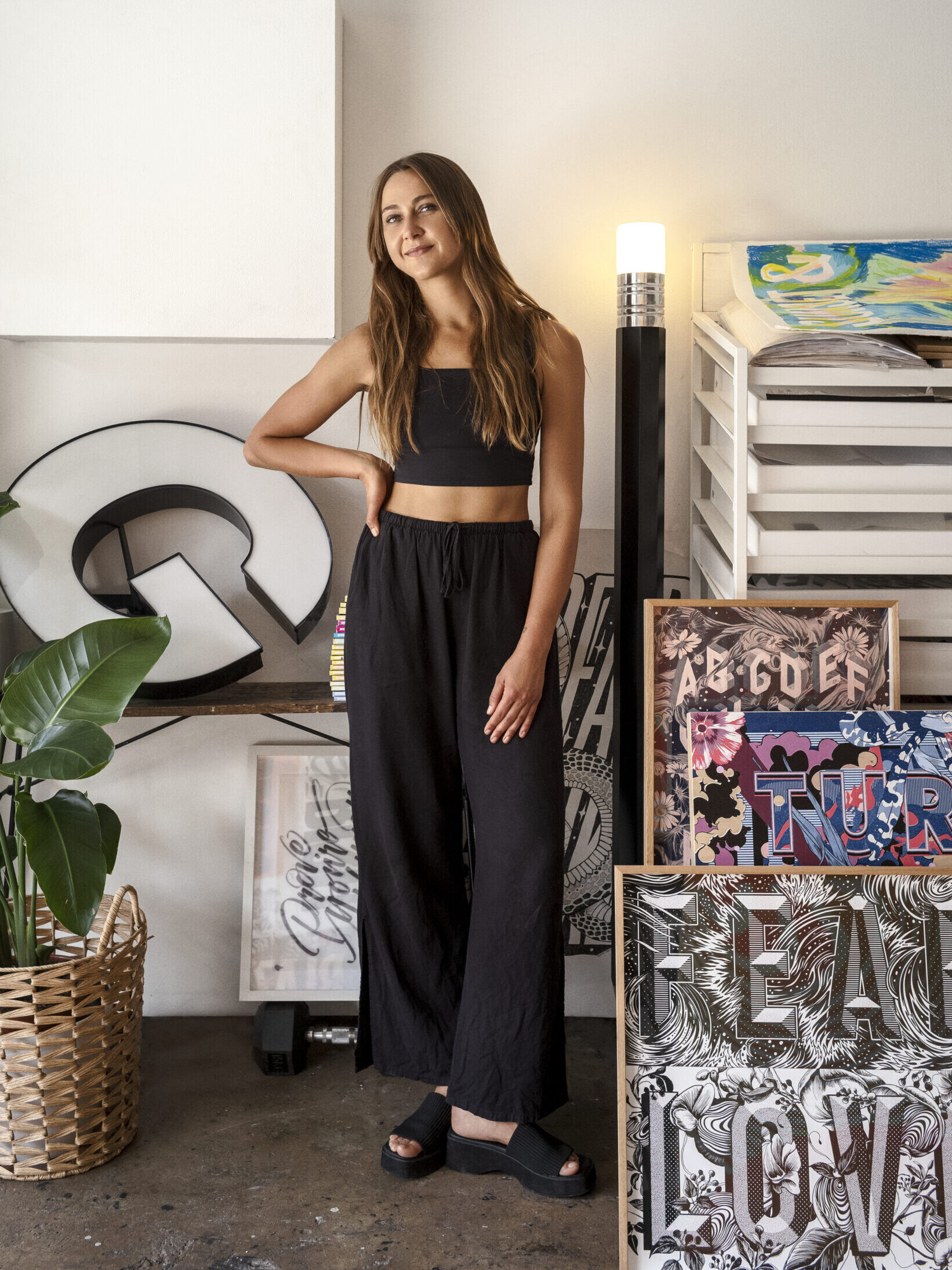
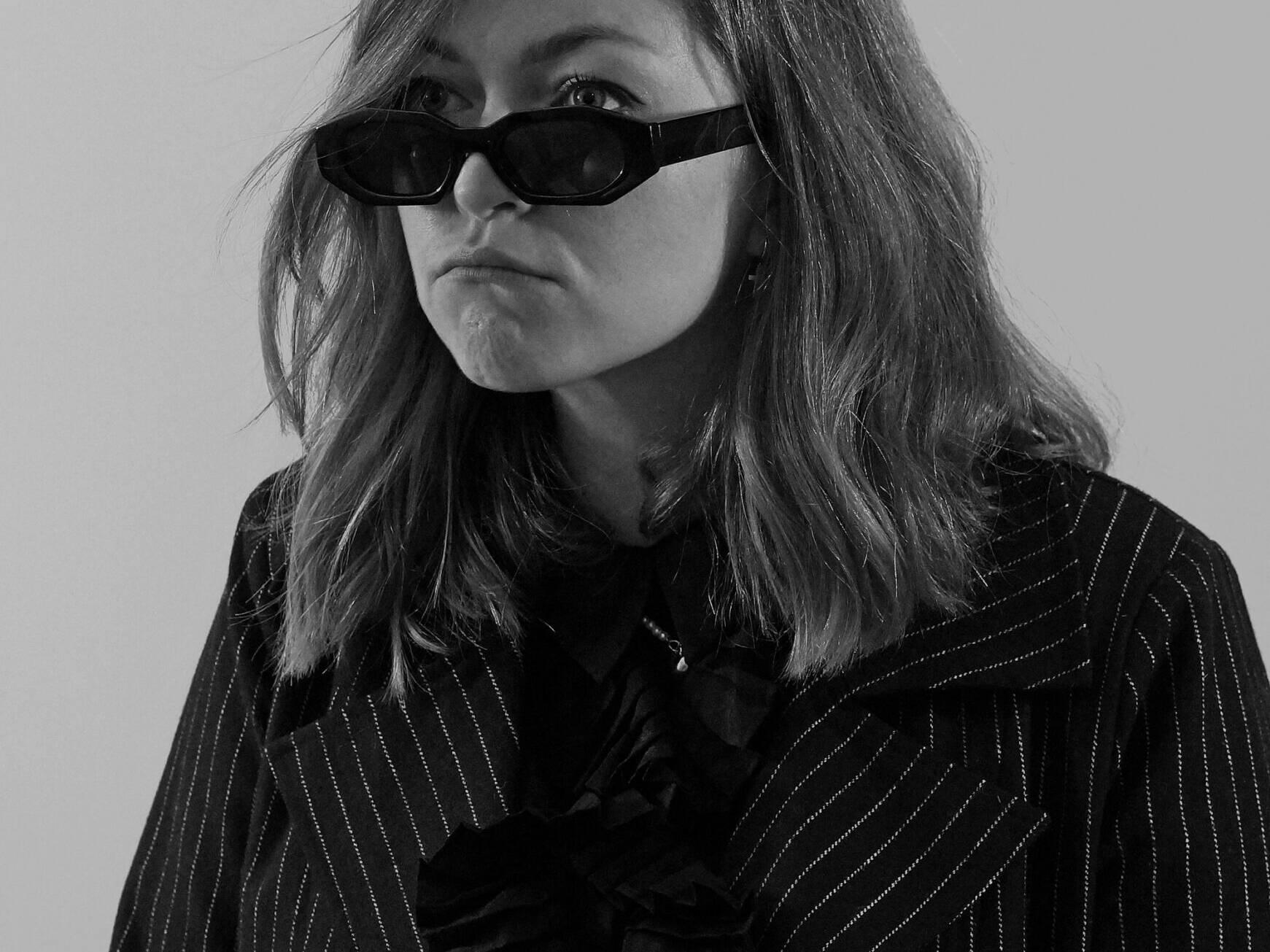
ABOUT INGRID PICANYOLIngrid Picanyol is a Catalan graphic designer and creative director based in Barcelona. She runs a three-person studio in the Gràcia neighbourhood, teaches at Escola Masana, and serves as creative director of the film festival in her hometown of Torelló. She has worked with studios including Rowena Co (New York) and Futura (Mexico City). She is a poet with a book in progress, writes articles on design and life published on her website, plays guitar in an all-women punk band, and is currently studying for a philosophy master's degree. A book of her bus-written texts is forthcoming from Set Margins (Netherlands).
Tune in wherever you get your podcasts /
Tune in wherever you get your podcasts /



Episode Description
She chose graphic design over photography because she couldn’t afford a camera. She chose it over philosophy because her teacher told her to get work first and study ideas later. Now, in her forties, she runs a studio of exactly three people, plays guitar in a punk band with no expectations, writes articles on the bus and has a book of poetry almost ready for print. And she’s just started her philosophy degree.
Ingrid Picanyol is a Catalan graphic designer based in Barcelona whose work spans brand identities, editorial projects, posters, and cultural institutions — including a film festival in her own small hometown, which she describes as closing the hero’s journey. This conversation is about what happens when a designer stops asking design to satisfy every creative need — and discovers that the answer is not less, but more.
Photography, Philosophy, or Design — and Why It Was Partly About Money
Ingrid grew up in Torelló, a small town an hour from Barcelona towards the Pyrenees — known locally as the “Catalan Liverpool” for its unusually rich music culture. She left home at 16, joined an all-women punk band, and spent her childhood outdoors on her bike, which is why she still hasn’t seen Lord of the Rings or Harry Potter.
When it came to what to study, she was torn between photography and philosophy. Her teacher gave her practical advice: photography first, because it leads to work, and philosophy is something you can return to at any point in your life.
She didn’t choose photography either. She chose graphic design — and partly for a reason she only understood years later.
“I chose graphic design rather than photography because to work as a photographer, it’s expensive. You need a camera, flashes, a studio, backgrounds. And I didn’t have money. I saw in graphic design a profession I could do with just a laptop.”
She started working in a studio before finishing her degree, learning from designers inside what she calls “the kitchen of a studio.” By the time she graduated, she was already ahead. Then came New York — working with Rowena Co and Javaloyas — on $12 or $15 a day, sleeping on couches, investing in her career rather than her bank balance.
“I was like, okay, $12 per day. I’m going to sleep on couches. But I’m investing in my career. No problem.”
Then Mexico City, working with Futura. Then back to Barcelona, where she has been ever since — in a studio in the Gràcia neighbourhood, with a team of exactly three people including herself.
“If I grow beyond that, I stop designing and become a manager. I saw that the perfect size is three people. So I kept it there.”
The Studio of Three — and Why Freedom Is Non-Negotiable
The decision to keep the studio small is directly connected to something that runs through the entire conversation: Ingrid’s relationship with freedom. She has worked as a creative director for a Miami-based brand for seven years — a long, stable, weekly working relationship — but entirely from her own studio, on her own terms.
“For me it’s impossible to work as an employee. I have other interests in my life. I do poetry, I write, I have a band. This flexible schedule allows me to do all the things I need to be happy. For me, it’s really important to be happy working.”
She is not someone who separates design from life or work from identity. Everything is connected. And she learned early that putting someone between herself and the client — a boss, an agency structure, a hierarchy — doesn’t work for how her mind operates.
“I want to interview the client, talk with the client, visit the client. I think the work is born there, in those conversations. Design doesn’t come from nowhere — it comes from the relationship.”
One of the most revealing moments in the conversation is when she describes discovering that clients will wait. Early in her career, the fear of losing a project meant she always said yes immediately. Then one day she told a client she couldn’t start for two months and asked if that was okay.
“They told me, why not? And I was like, wow. We can work with a waiting list. That’s possible.”
She is careful to note this doesn’t work for everyone — it depends on recognition, on trust, on where you are in your career. But the lesson is worth asking the question.
Poetry, the Bus, and a Book Almost Ready for Print
The conversation takes a turn when Ingrid describes how she started writing poetry. A developer who shares her studio space noticed something about how she works — the way she condenses a concept, strips it to its essence, finds the image that holds everything.
“He told me: I see how you work. And it’s pretty similar to poetry, because you condense a concept and explain it in a very direct and visual way. And somehow poetry works like that.”
She signed up for a course. Then another. Now she has a book of poetry almost ready for print — currently waiting on a literary award — and a second book coming from Dutch publisher Set Margins, written entirely on the bus. Every text was composed during her morning commute on line H6 in Barcelona.
“I dream about doing a book presentation inside the bus, going through the whole line, talking about the book as a travelling public event.”
She writes articles too — essay-style reflections on design, creativity, and life published on her website — and these have become, by her own account, the thing that most keeps her in the profession.
“Since I started writing those articles, almost two years ago, I don’t want to leave design anymore. I found my medicine.”
Design Is Design — And That’s Not Enough
This is perhaps the most important insight in the entire episode: the idea that a designer who is fundamentally a creative person cannot and should not ask design alone to satisfy all their creative needs.
“I’m a designer, but I’m not a designer. I’m a creative person. And I saw myself asking the design profession to satisfy all my needs — all my creative needs. And that’s not possible. Design is design.”
Once she accepted that, something shifted. She started the band. She started writing. She started studying. And suddenly design itself became more enjoyable — because it was no longer carrying the weight of everything.
“Now I’m satisfied because my emotional creative soul is calm. Life is great. And design is design, but there are a lot of other things that are super fun.”
The band is a particularly good example of what that shift feels like. An all-women punk trio, they have given two interviews and invented their origin story for both of them.
“How did you start? We were in a plane to Tokyo talking about crypto. That’s the energy. This is not a serious project.”
No goals. No audience. No expectations. Just three people having fun.
“It’s like being a child again. There are no goals in the sense of success.”
Plato, Philosophy, and Voice Messages to ChatGPT
The most unexpected moment of the episode comes when Ingrid describes a bad client meeting — people who hired her for her expertise and then spent the meeting explaining to her how design works. She drove home frustrated. And instead of calling a friend, she opened ChatGPT and sent a voice message.
“I was in my car: hey Chat, why do you think people do this? And what does Plato think about this? And he was like, yes, blah, blah, blah…”
She is currently studying for a philosophy master’s degree — finally fulfilling the path her teacher redirected at 18. The goal is eventually to do academic research, possibly a doctorate. The practical motivation was getting the qualifications. But the deeper motivation is something she’s been working towards all along.
“I feel that there is some kind of philosophy in my writing — I’m looking at normality as a stranger. I’m looking at the profession as a stranger, going deeper, making metaphors. I realised now is the moment to restart.”
She is also clear that philosophy hasn’t directly changed how she designs — yet. But it feeds the writing, which feeds the thinking, which feeds everything else.
“Everything is interconnected. Everything.”
The Advice to the 8-Year-Old Stranger
The episode closes with Ingrid describing her childhood self as someone who always felt slightly different. Not unhappy exactly — she had friends, she was social — but as though she didn’t quite fit in the way others seemed to.
She switches to Spanish for this part, saying she felt incomprendida — not fully understood. And her advice to that child is tender and precise.
“Don’t worry, there are a lot of people that feel like a stranger, just like you. So you are not alone. You will meet amazing people who connect a lot with you. And you will have the chance to explain yourself — to explain your vision to the world. You will have a voice.”
Key Takeaways
For designers feeling burned out or wanting to quit: Don’t ask design to satisfy all your creative needs — it can’t, and it wasn’t meant to. Find the other things. The poetry, the band, the writing, the garden. Design gets better when it isn’t carrying everything.
For freelancers afraid to say no or ask clients to wait: Ask the question. Some clients will wait. You won’t know until you ask. And saying no to the wrong project is not failure — it’s the practice of knowing what you’re actually for.
For creatives who feel like they don’t fit one label: Being a designer but also other things is not a lack of focus. It is a profile. Ingrid Picanyol is a graphic designer, a poet, a punk musician, a philosopher, a writer, and a gardener. All of those things make her better at each of the others.
For anyone who felt like a stranger growing up: You will find your voice. And when you do, you will have more to say than the people who always felt they belonged.
Ingrid Picanyol is a Catalan graphic designer and creative director based in Barcelona. She runs a deliberately small studio of three people in the Gràcia neighbourhood, teaches at Escola Masana, and serves as creative director of the film festival in her hometown of Torelló. Outside design, she writes poetry, plays guitar in an all-women punk band, and is currently studying for a philosophy master’s degree.
Ingrid Picanyol deliberately limits her studio to three people including herself to ensure she continues designing rather than managing. She observed that as studios grow, the founder often transitions into a project management role and stops doing the creative work that drew them to design in the first place. Keeping the team small protects her direct involvement in every project.
Ingrid Picanyol began writing poetry after a developer in her shared studio noticed that her design process closely resembles how poetry works — condensing a concept to its essence, finding the precise image or form that holds the most meaning, and communicating it directly and visually. She has since written a full book of poetry and credits writing as the thing that saved her relationship with design.
Ingrid Picanyol manages multiple creative pursuits — design, poetry, writing articles, playing in a punk band, studying philosophy, and gardening — by keeping her design studio deliberately small and her schedule flexible. She also describes reaching a point in her career where the practical mechanics of running a studio felt “arranged,” which freed mental space to think more expansively about creativity and life.
Ingrid Picanyol advises designers who feel burned out to stop asking design to satisfy all their creative needs. She argues that design is design — a specific discipline with specific constraints — and that a creative person needs other outlets to thrive. For her, poetry, writing, and playing in a punk band have given her emotional and creative satisfaction that design alone cannot provide, which paradoxically made her a better and more committed designer.
Ingrid Picanyol began studying for a philosophy master’s degree in her forties for two reasons: to eventually pursue academic research or a doctorate, and to fulfil a desire she had at 18 when she first chose between photography and philosophy. She also found that her essay writing on design had an increasingly philosophical quality — looking at normality and the profession from the perspective of a stranger — and wanted to develop that thinking more rigorously.
Ingrid Picanyol is working on a book to be published by Set Margins, a Dutch design publisher. The book is composed of texts she wrote on the bus during her daily commute on line H6 in Barcelona. She has described dreaming of presenting the book as a travelling event inside the bus itself, going through the entire route.
If you liked this episode, listen to...
Vogue, Nike, Bats in the House & Why Design Is Worth Fighting For
Marta Cerdà Alimbau (S02/E26) — another deeply personal conversation with a Catalan designer about creative identity, surviving the hard years, and why the work is worth fighting for.