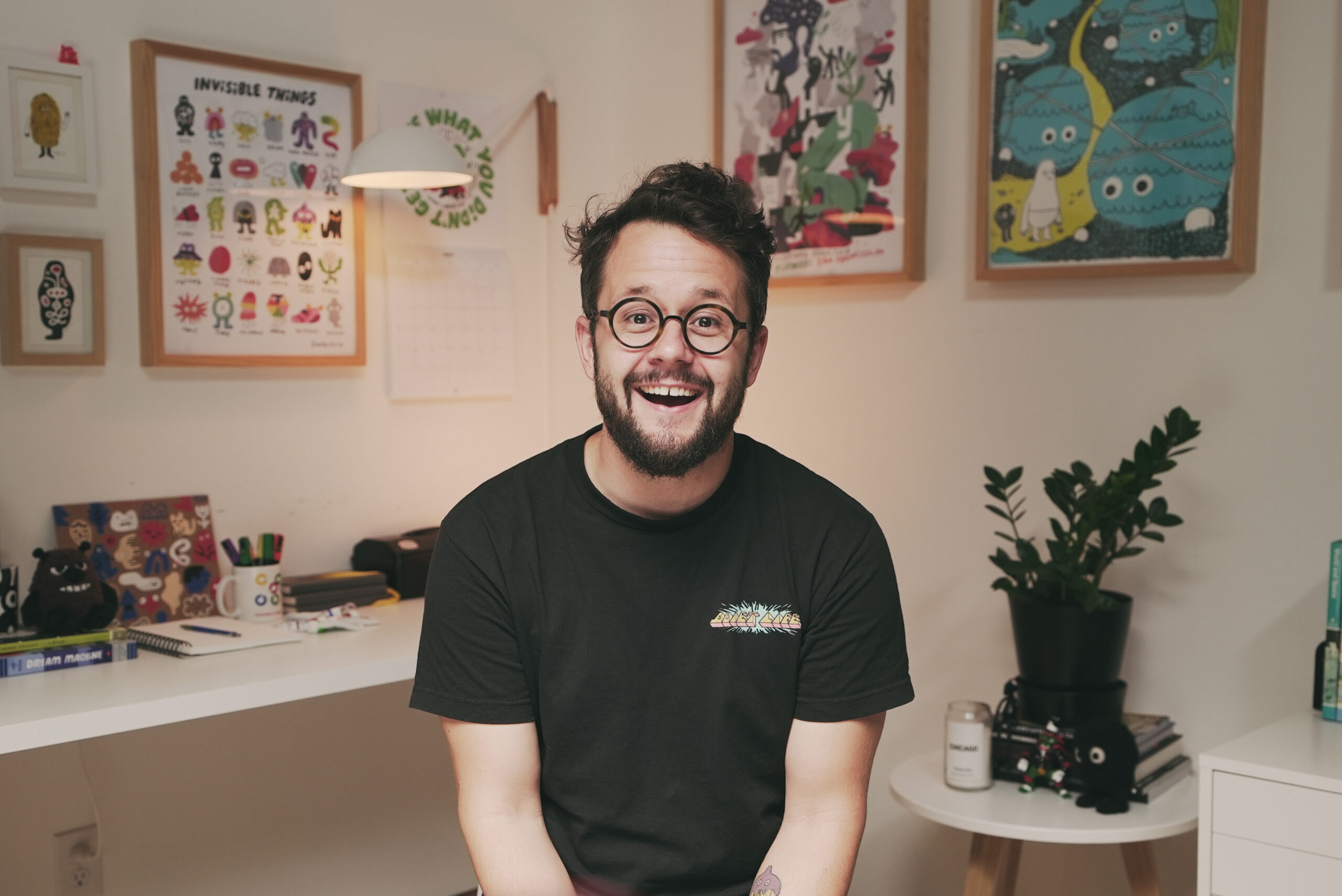
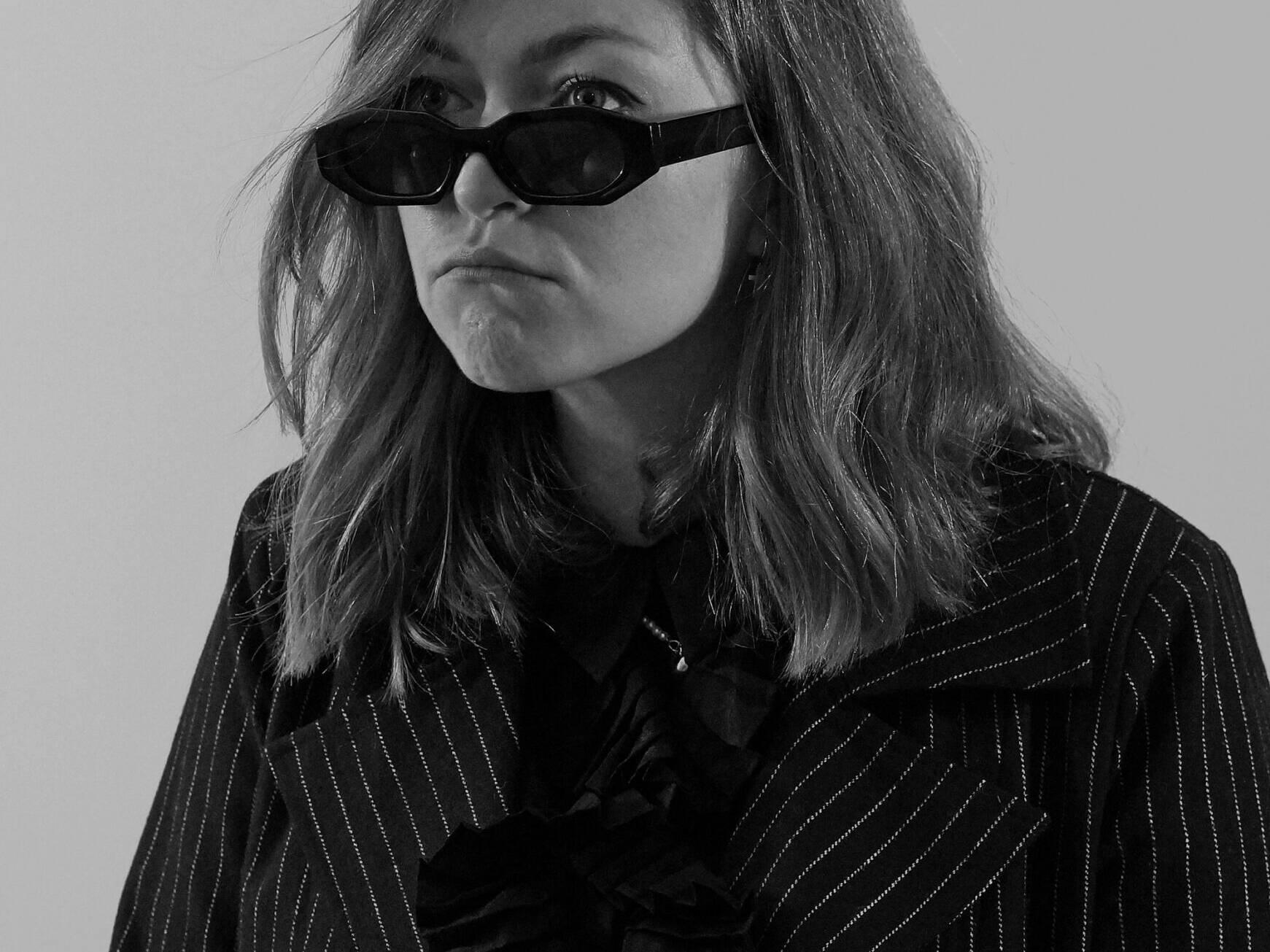
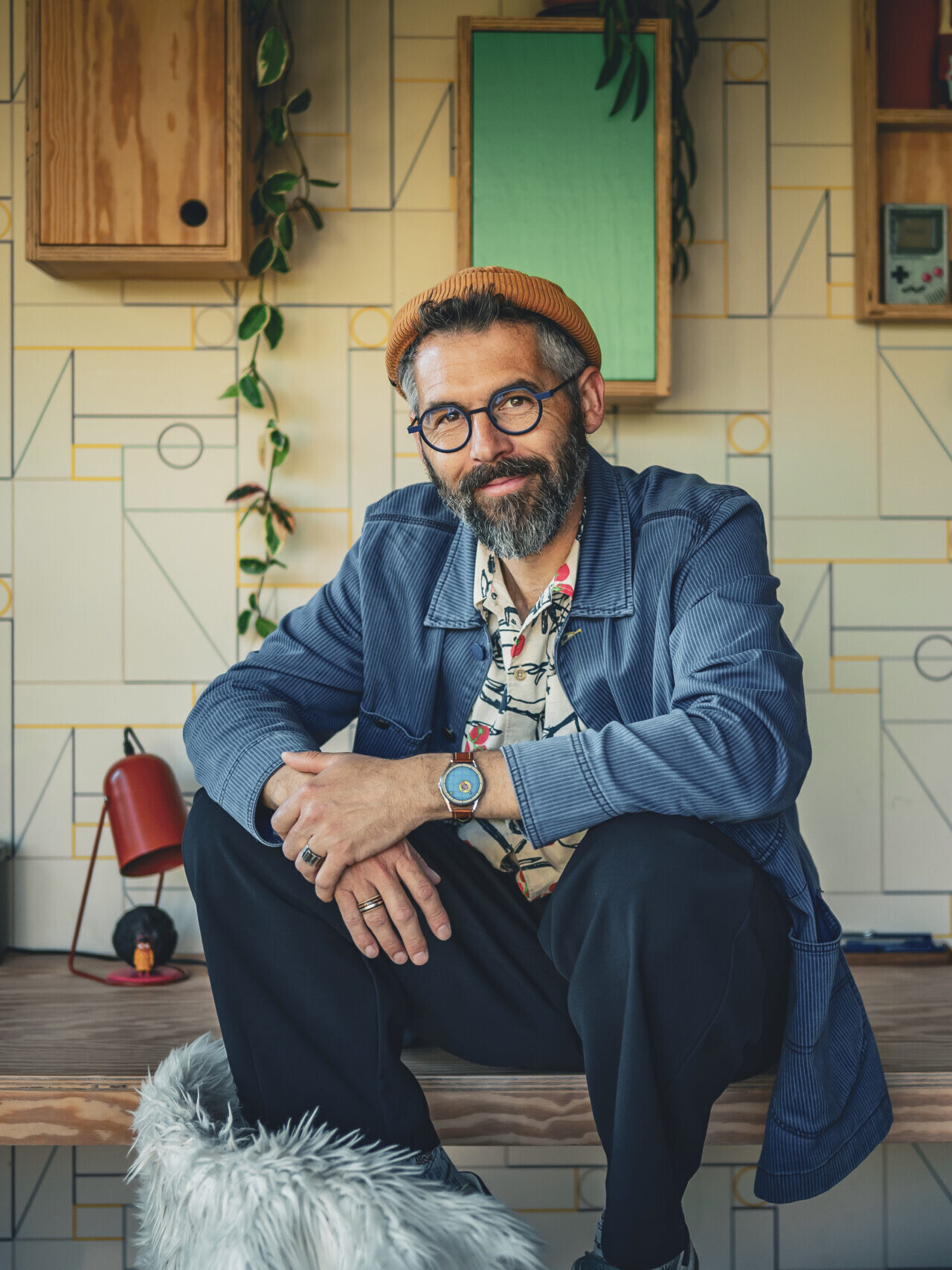
ABOUT CJ CAWLEYCJ Cawley is a British freelance designer, design content creator, and co-host of the design podcast Sticky Notes. He's known for his Charlie Chaplin-style silent-format design videos and for being one of the most candid voices in the design community on social media, freelance life, and creative confidence.
Tune in wherever you get your podcasts /
Tune in wherever you get your podcasts /



BONUS EPISODE
The first Captn OffScript bonus episode drops this friday!
On Friday, the Captn OffScript bonus episode with CJ Cawley drops. It goes into childhood, family, the script you’re given as a kid, and the partners and friends who help you rewrite it. CJ talks openly about growing up on a council estate in London, leaving home at sixteen, and cutting ties with his family two years ago. I share my own parallel story, which I haven’t spoken about publicly before. It’s one of the most personal conversations I’ve ever recorded.
The bonus episode will be exclusive to Captn OffScript newsletter subscribers for the first 7 days. It’ll then be released publicly the following week.
Episode Description
CJ Cawley is having the strangest year of his career. Someone built an entire website that was a pixel-for-pixel clone of his, kept everything, then replaced his face and logo with a stranger’s. A parody video of him went viral inside the design community and brought a wave of hate he hadn’t seen coming. He’s getting married this weekend. He launched a podcast with his best friend after four years of recording nothing but private weekly calls between the two of them.
And through all of it, he keeps showing up on camera. Even with psoriasis on his face. Even on the mornings he wakes up and the comments are already pouring in.
This episode is one of the ones I’ve been most looking forward to publishing all season. We recorded for over an hour and twenty minutes and the conversation went so deep that the most personal part needed its own space. The main episode is here, public, on all platforms. The bonus episode is dropping Friday — the first-ever exclusive bonus episode of Captn OffScript, available only to newsletter subscribers for the first seven days. More on that at the bottom.
The website that wasn’t his
A follower DM’d him late one night with a link. Half past ten, about to go to bed, CJ opened it expecting spam and instead saw his own studio looking back at him. The colours. The shapes. The way the page loaded. Every image on his site, except his face had been swapped for someone else’s, and the logo had been replaced with the word Delwox.
He showed his partner. She thought someone had cloned him. He lay in bed not able to do anything about it, waiting for the morning to scroll through it properly. The site was the full thing — portfolio, working bit, studio photos — all his, with another person’s face Photoshopped over his on every image. Some of the edits were good enough that CJ said you could’ve shown them to anyone and they’d have nodded along. Others were obvious AI, including one side image where his eye came out demon-white.
The thing he kept saying, almost in disbelief: he wasn’t even angry. He was weirdly honoured to be that thoroughly ripped off. His retaliation was perfect — he printed out a handmade Delwox sign and stuck it outside his own studio. The site has since gone, but CJ wasn’t sure if it was his post that got it taken down or just time.
The video, the pile-on, and the disappointing maths of design Twitter
Two weeks later, something heavier happened.
A parody video circulated that was clearly meant to look like him — same Charlie Chaplin-style silent format CJ has built his work around, with what he describes as his own fingerprints clearly studied and copied. He didn’t immediately think it was about him. It was the hundreds of people sending it to him with dude, this is you that made him look harder.
The video itself, he says, was actually funny. If it had been sent to him privately, with any camaraderie, he’d have laughed and posted it on his own feed. But it wasn’t framed that way, and the comments it incited got dark fast. People he’d never met saying they hated his face, hated his work, hoped terrible things would happen to him. By the time he woke up to it, the pile-on was already running.
What broke him most wasn’t the comments. It was the maths of the response. When CJ posted gently that the video didn’t feel great, people came for him for saying so. The dominant argument was that the parodist was entitled to his opinion and CJ wasn’t entitled to his. Calling out behaviour you don’t love, somehow, became worse than the behaviour itself.
He doesn’t dwell on it for long. He acknowledges he probably escalated it by saying anything at all. He notices the names of people he’d respected showing up in the comments. He’s clear he had to ride it out because there was nothing else to do. And he frames the people writing him violent emails the way he frames internet hate generally — with empathy. It takes a hurt person to spend their day attacking a stranger over a drawing.
Getting married, with a Skittles alley and an aerial hoop
The contrast to all of that, the warmest moment of the conversation, is his wedding. It’s four days away as this episode goes live. He told me before we started that he was scared and excited in equal measure.
CJ says if you’d asked him at sixteen, twenty, twenty-five, he wouldn’t have believed he’d ever be the person to find someone who wanted to spend their life with him. That just wasn’t on his cards. It wasn’t something he spent any time thinking about. And now, every day getting closer to it, he’s more grateful for it.
The wedding itself sounds completely on-brand. A surf simulator. A Skittles alley. An aerial hoop. An illustrator drawing the guests. His best friend, who just summited Everest two days before we recorded and vlogged the entire thing, is going to vlog the wedding too. CJ’s giving every guest a camera so he doesn’t have to hire a videographer. It’s going to be a circus, in the best way.
Psoriasis, the camera, and “no one cares what you look like”
I asked CJ how he handles being on camera, because I struggle with it badly. Every recording day I wake up hoping the guest will cancel. I’ve never quite gotten over the anxiety, and I told him so.
CJ said something I needed to hear. He has psoriasis. He got it on his face at fifteen and he’s had it ever since. It flares in winter, the skin cracks, sometimes he looks in the mirror and just feels shame. He still records. He still hits publish.
His reframe is simple. No one cares what you look like on camera. No one notices your skin, your wonky tooth, the thing you can’t stop seeing in yourself. He’s made hundreds of videos, been zoomed in on a 5K monitor at his ugliest, and he can count on one hand the times anyone has flagged anything about his appearance. The viewer is there for the video, not for you. The video has to serve them.
It’s exposure therapy, he says. There’s no shortcut and no advice that works. You just keep doing it and eventually it stops being the thing that stops you.
Sticky Notes, and four years of private calls
CJ launched a podcast with his friend Jack a few months ago. Sticky Notes. It’s already pulled thousands of subscribers and is genuinely one of the best new design podcasts to land this year. What most people don’t know is that they’d already been doing it for four years.
CJ and Jack found each other early in their freelance careers, both months in, both lonely, both bewildered by how isolating going solo turned out to be. They started jumping on a call every Thursday to check in on each other. How are you getting on. What’s pissing you off. How did that client meeting go. There was never a business idea attached to it. It was just two friends keeping each other afloat through the loneliest job in the industry.
After three or four years of those calls, one of them said if we’d been recording this, that would’ve been good. So they pressed record. The rule was nothing could change — no scripting, no polishing, no overcooking. Just the same call, with the camera on. It’s already resonating because that’s how rare unscripted conversation has become.
The McDonald’s theory of AI
This was the moment of the conversation I kept coming back to.
CJ is in the camp that the AI work is bad. He doesn’t think it’s good. He thinks the people who think it’s already as good as human work are an audience he can’t reach, and he’s made peace with that audience existing.
His metaphor for it is the McDonald’s theory. McDonald’s is technically a cheeseburger. It has a bun, it has beef, it gets made fast, it’s cheap. It also doesn’t go mouldy after 49 days, which is its own quiet horror. Plenty of people will eat it. McDonald’s is a trillion-dollar business. It exists, it’s everywhere, and there’s no point fighting it.
But there’s also still a chef-cooked burger, made by a human, with love and good ingredients, where you’re willing to wait longer and pay more for it. When McDonald’s appeared, the chefs didn’t all shut their kitchens. They just kept cooking. AI is McDonald’s. There’s still room — there’s always room — for the burger made by hand.
His backup plan, if things get worse, is to lean further into things AI can’t do. He’s already making merchandise in his studio. Carving logos out of wood. Printing T-shirts. Doing lino printing. He doesn’t want an exit strategy from design. He just wants to keep making things with his hands.
Knob head tax, and the freedom of saying no
CJ now interviews his clients before he interviews them back. The first hour of any new project call is, in his words, figuring out whether the person is a knob head. If they are and he still needs the gig, he charges what he calls a knob head tax to make the work worth the headache. If he doesn’t need the gig, he passes.
It’s a privileged position to be in. He knows that. He says it explicitly. But the way he got there is by spending years being unable to say no, and learning the hard way that money isn’t worth the toll a bad client takes. The freedom to walk away is, eventually, the whole point of going freelance.
What he’s most grateful for
I closed by asking what he’s most grateful for at this moment. The answer came without a pause.
His partner. The shit she puts up with him. The way she just gets it. The fact that he’s standing in his own studio, talking to me, only because she showed him the way, believed in him, and saw the good part of him before he could see it himself. The only reason any of this is happening, he said, is her.
That was the cleanest way the conversation could have ended.
CJ Cawley is a British freelance designer, design content creator, and co-host of the design podcast Sticky Notes. He’s known for his Charlie Chaplin-style silent-format design videos and for being one of the most candid voices in the design community on social media, freelance life, and creative confidence.
Sticky Notes is a design podcast co-hosted by CJ Cawley and his close friend Jack. The two had been having private weekly check-in calls for four years before deciding to hit record on the conversations. The podcast is built around the rule that nothing about the calls can change — no scripting, no polishing, just two friends being honest about freelance design and creative business.
In 2026, someone built an exact clone of CJ Cawley’s website, keeping the design, structure, portfolio, and studio photos, but replacing his face on every image with another person’s and changing the logo to Delwox. CJ’s retaliation was to post about it and put a handmade Delwox sign outside his own studio. The clone site is no longer online.
CJ has psoriasis on his face since age fifteen and openly talks about the discomfort of being on camera. His reframe is that no one cares what you look like — viewers are watching for what the video can do for them, not for the creator’s appearance. He treats putting himself on camera as exposure therapy: there’s no shortcut, you just keep doing it until it stops stopping you.
CJ Cawley’s metaphor for AI in creative work. McDonald’s is technically a burger, made cheaply and quickly, and there will always be an audience for it. Independent restaurants didn’t shut down when McDonald’s appeared. The same is true for AI-generated design — there’s a market for the fast, cheap version, but there’s still always going to be a market for human work made with care.
Yes. The Captn OffScript bonus episode with CJ Cawley drops on Friday following the main release and is available exclusively to Captn OffScript newsletter subscribers for the first seven days before being released publicly. It covers childhood, family, and the most personal part of the conversation. Subscribers can sign up at captn.myflodesk.com/newsletter.
If you liked this episode, listen to...
Andy J. Pizza (S02/E30) — another deeply personal conversation about showing up on camera, working with what you’ve got, and cultivating yourself instead of trying to fix yourself. Same emotional register, same kind of honesty.