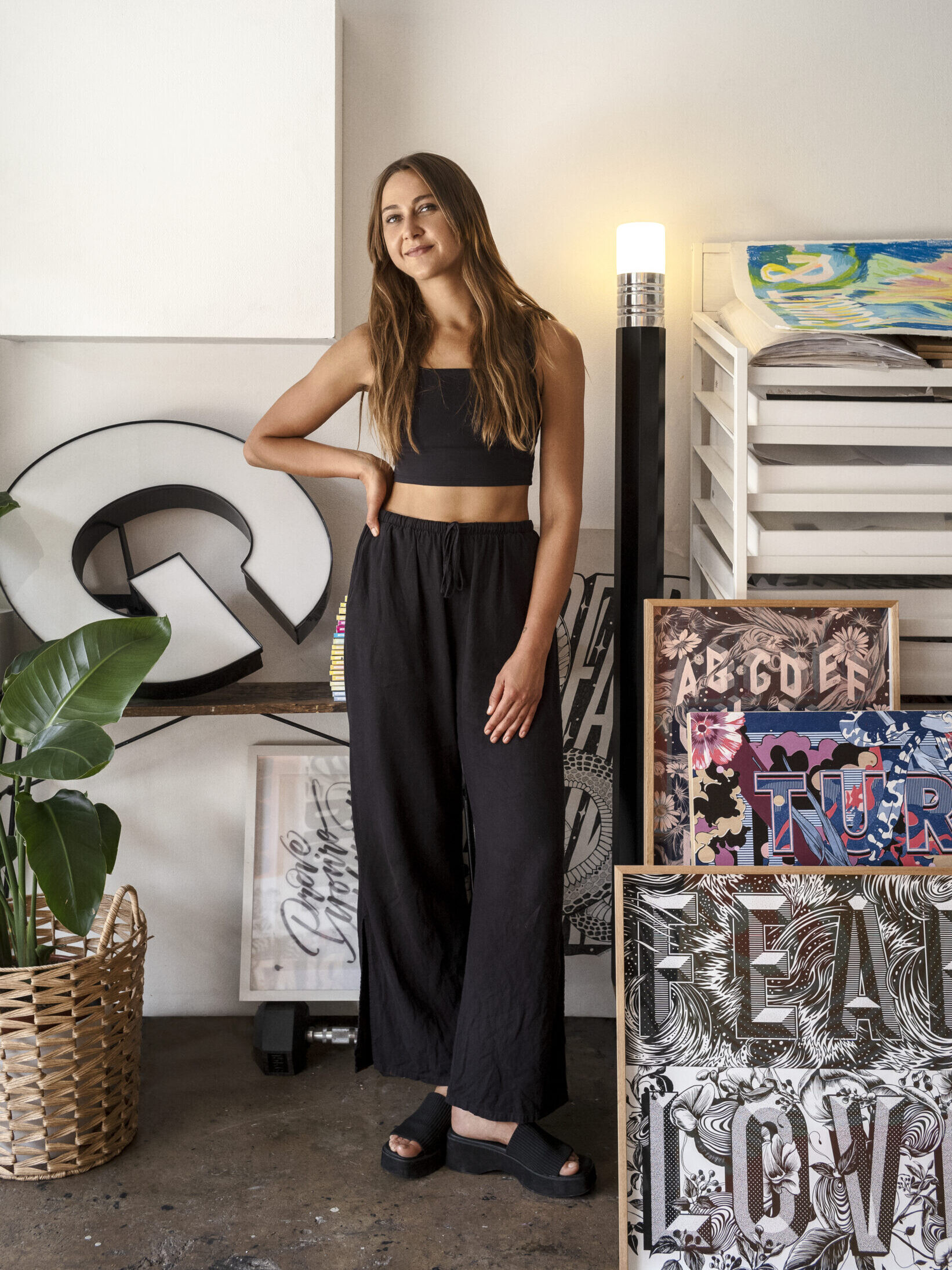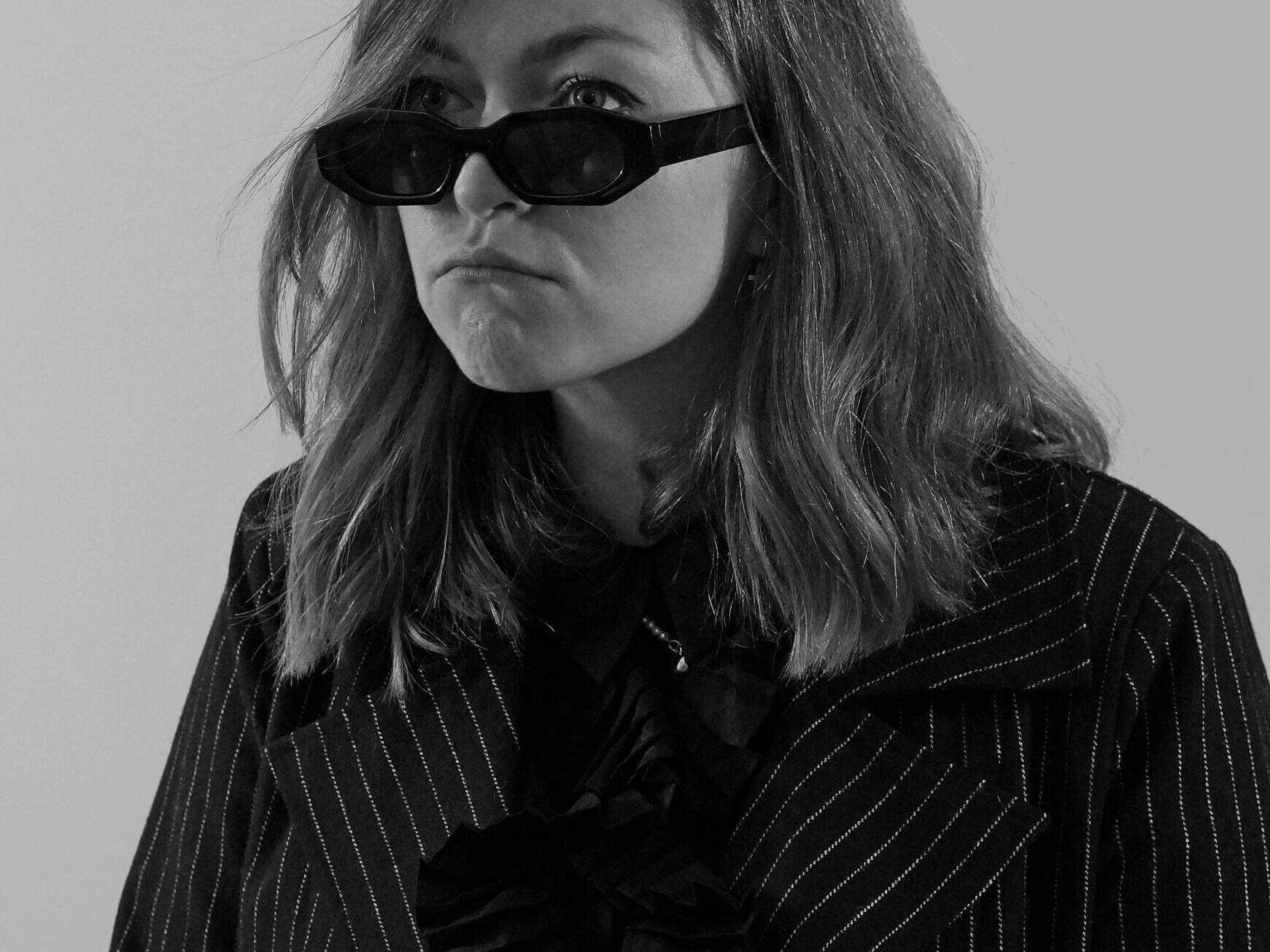
ABOUT TERESA FERREIRATeresa Ferreira is a Portuguese-born, London-based creative director and the founder of Ferrgood Studio. She was raised partly in Lisbon and partly in Macau, came into design through archaeology and illustration, spent seven years at the Financial Times as head of design, and now runs her own studio focused on building sustainable, timeless brands.
Tune in wherever you get your podcasts /
Tune in wherever you get your podcasts /



Episode Description
Some people walk a straight line into design. Teresa Ferreira dug her way in, quite literally, through archaeology. She was born in Lisbon, spent part of her childhood in Macau, has lived in London for nineteen years, ran design at the Financial Times, and now runs her own studio, Ferrgood. When I said at the start of this episode that she felt like the whole world in one person, I wasn’t exaggerating. What I didn’t expect was how much of our conversation would be about slowing down, letting go, and unlearning the idea of a perfect day.
The whole world in one person
Teresa was in Lisbon until she was five, and then her mum, a career-driven economist, moved to Macau for work, so Teresa went with her. She spent those years being dragged around the markets by her Filipino nanny, Dolly, who she’s still in touch with, seeing a side of the world well outside the Portuguese colonial bubble. From five, she was flying between Macau and Portugal on her own to spend summers with her dad. That independence, and a hunger for financial freedom, got wired in early.
She’s clear-eyed about all of it, including the colonialism she was born into the tail end of. But she also credits that childhood with opening her mind. It taught her that you could have a career and still go anywhere, that the world was bigger than one place, and that curiosity was worth following.
Talked out of art, and back in through archaeology
Here’s the part I found most surprising. Teresa was always drawing as a kid, and she was quietly talked out of it by someone close in the family. Hers is a very academic household, an economist mum and a doctor dad, the kind where you get a real job and follow a career. So she buried the drawing and went to university for archaeology, because she’d always loved history and storytelling, and archaeology at least felt practical.
And then, on archaeological digs, she started drawing again. They needed people to do the technical illustration of the structures and artefacts being uncovered, and Teresa’s hand shot up. That led her to an evening course in scientific illustration, taught by a wonderful Portuguese illustrator called Pedro Salgado who specialises in drawing fish, then to a master’s in archaeological illustration, and finally, doing museum graphics, to the realisation that what she really loved was graphic design. She’d always loved mixing words and images, the collages that covered her teenage bedroom walls, and Photoshop, when she found it, felt limitless. She could put anything next to anything. When she moved to London and saw there were far more jobs in graphic design than illustration, the path clicked into place.
From charity work to the Financial Times
Teresa’s career built quickly once she committed. A first full-time job at Diabetes UK, at exactly the moment everyone was building apps, which suited the techie, integrated designer in her who’d always done both offline and online. Then an agency, a startup, and then the Financial Times, where she stayed seven years, joining as a senior designer and being promoted to head of design within a year. She loved it. But as she put it, you get to a crossroads, and you have to decide what actually fulfils you.
Building brands that last
What drives her now is building sustainable, timeless brands, and that comes straight out of her history obsession. She’s always thinking about the legacy piece, what makes something timeless, what makes something make a real dent in culture rather than just trending for a season. She loves finding the equivalence, the way something feels new but was already happening centuries ago.
It’s also why she loves branding specifically. She’s a generalist and an integrated designer, drawn to the overarching story rather than one narrow specialism. To her, brands have become more than design. They’re an experience, a feeling, a way people find meaning and belonging and tribe in a capitalist world. The best branding, she thinks, transcends the design entirely and becomes something human.
Leaving the safety of the big brand
Teresa has spoken openly about self-doubt, and a lot of it traces back to her non-traditional route in. She doesn’t come from design, and inside a big institution like the FT, that’s easy to hide. The brand validates you. You’re the person this big name believes in and pays. The moment she decided to go out on her own, that cover disappeared, and with it came the fear that everyone would finally find out she wasn’t that good. It’s the kind of thing that grows in a household of high achievers who were never really acquainted with professional failure, and who weren’t entrepreneurial at all. Her parents followed careers. That, she’s realised, isn’t how the modern career works, and you have to do what makes you happy anyway.
Burning out, twice
That crossroads was really the end of a long road toward burnout. Teresa had two big ones. The first was at a chaotic, badly structured agency, where she and one other person were the entire creative team turning around an impossible amount of work. She was so relieved when the FT headhunted her that the timing felt like rescue.
The second came at the FT, after COVID, when she started craving more fulfilment. The higher up she got, the less hands-on she was, the more admin she carried, the more she was stuck in the middle between senior demands and the team she managed. She asked to condense her week into four longer days so she could freelance on Fridays and dip a toe into working for herself, because she’d always been almost paranoid about financial independence. Six to eight months in, she ran out completely. She stopped sleeping, had a week of insomnia so bad she went to the doctor, and was told she was burning out and signed off for stress. She handed in her resignation not long after. She needed to create, to apply her own vision, and she never looked back.
Letting go of the perfect day
I read Teresa a quote of hers from a Creative Boom Q&A, where she described her idea of balance: wake up energised, walk in nature, breakfast, journal or meditate, a few hours of focused work, a healthy lunch with a friend, sparky afternoon meetings, then gym or pilates, then an ordinary evening of chores, reading, cooking, and an early night. I asked, only half joking, whether that was even possible.
She laughed and said no, that was the high achiever in her describing a perfect day she thought she had to strive for. And for years she genuinely tried to live it, arriving at the end of every single day with a feeling of failure because she hadn’t meditated, or exercised, or eaten well, or had a good enough meeting, all things half outside her control. We’re wired for it, she said. You can get ten compliments and one criticism and spend months thinking about the criticism. Chasing that perfect day was, in her words, the road to burnout.
What changed everything was letting it go. The moment she loosened her grip on what a perfect day or a perfect project should look like, she actually started attracting better clients and better opportunities, work more aligned with what she’s genuinely good at. It’s taken a lot of work, and she’s still fairly type A, but she’s far more flexible than she was.
Choosing a slower life
Teresa is done with hustle, and she’s honest that she was never any good at it and never liked it anyway. Some of that is being Southern European, from a country where life is slower, though she admits the drive to achieve was always in her too. She’s building a deliberately slower life now, and hoping, with a bit of optimism she cheerfully calls delusional, that the current AI upheaval might actually free people up to enjoy life more rather than just enriching the billionaire tech bros. Her question is a good one: as everything changes, is there a way to do it that benefits everyone?
In practice, slowing down looks like meditation and journaling most mornings, a real lunch break with ten minutes outside, and, most of all, saying no to more things. From a place of not needing to hustle, she can decline the event, the project, the thing that doesn’t serve her. She’s noticed how London makes slowness almost impossible, how everything has to be booked weeks ahead, and she envies the spontaneity of cities like Madrid. But after nineteen years she feels like a Londoner, and she loves the melting pot of it.
The drawing she’d keep
I asked Teresa what she’d keep if she had to delete everything she’d ever made, and her answer wasn’t design at all. It was a life drawing from university. Her drawing teacher, Graham Smith, who’s no longer with us, was the biggest encourager she ever had. He kept telling her she wasn’t really seeing what was in front of her, that she was drawing from the thinking side of her brain instead of looking. One day he taped a piece of charcoal to a bamboo stick, handed her a huge sheet of paper on the floor, and told her she needed a bigger canvas and less control over the tool. The drawing that came out was the best she’s ever done. He came over at the end of class and told her she’d finally seen it. She still has it, folded in a portfolio case, because it was the moment she learned to get out of the thinking mind and into the feeling mind.
And her advice to eight-year-old Teresa? Never stop drawing. Whatever anyone says, be proud of your work, and stop listening to the haters, even when the haters arrive dressed as people who are supposed to care for you.
— Alen
Teresa Ferreira is a Portuguese-born, London-based creative director and the founder of Ferrgood Studio. She was raised partly in Lisbon and partly in Macau, came into design through archaeology and illustration, spent seven years at the Financial Times as head of design, and now runs her own studio focused on building sustainable, timeless brands.
Teresa Ferreira came into design through an unusual route. Discouraged from art as a child, she studied archaeology, then started drawing again doing technical illustration on archaeological digs. That led to a scientific illustration course, a master’s in archaeological illustration, and eventually graphic design, which she fell in love with while doing museum graphics.
Ferrgood Studio is the design studio founded by Teresa Ferreira, focused on building sustainable, timeless brands. Her approach draws on her background in history and archaeology, treating brands as long-lasting cultural artefacts and experiences rather than short-term trends.
Teresa Ferreira left the Financial Times after burning out. As she rose to head of design, she became less hands-on and more consumed by admin, and after a period of severe insomnia she was signed off for stress. She resigned to start her own studio, wanting to create and apply her own vision.
Teresa Ferreira’s work is at ferrgoodstudio.com, on Instagram at @teresaferrgoodstudio, and on LinkedIn under Teresa Ferreira.
If you liked this episode, listen to...
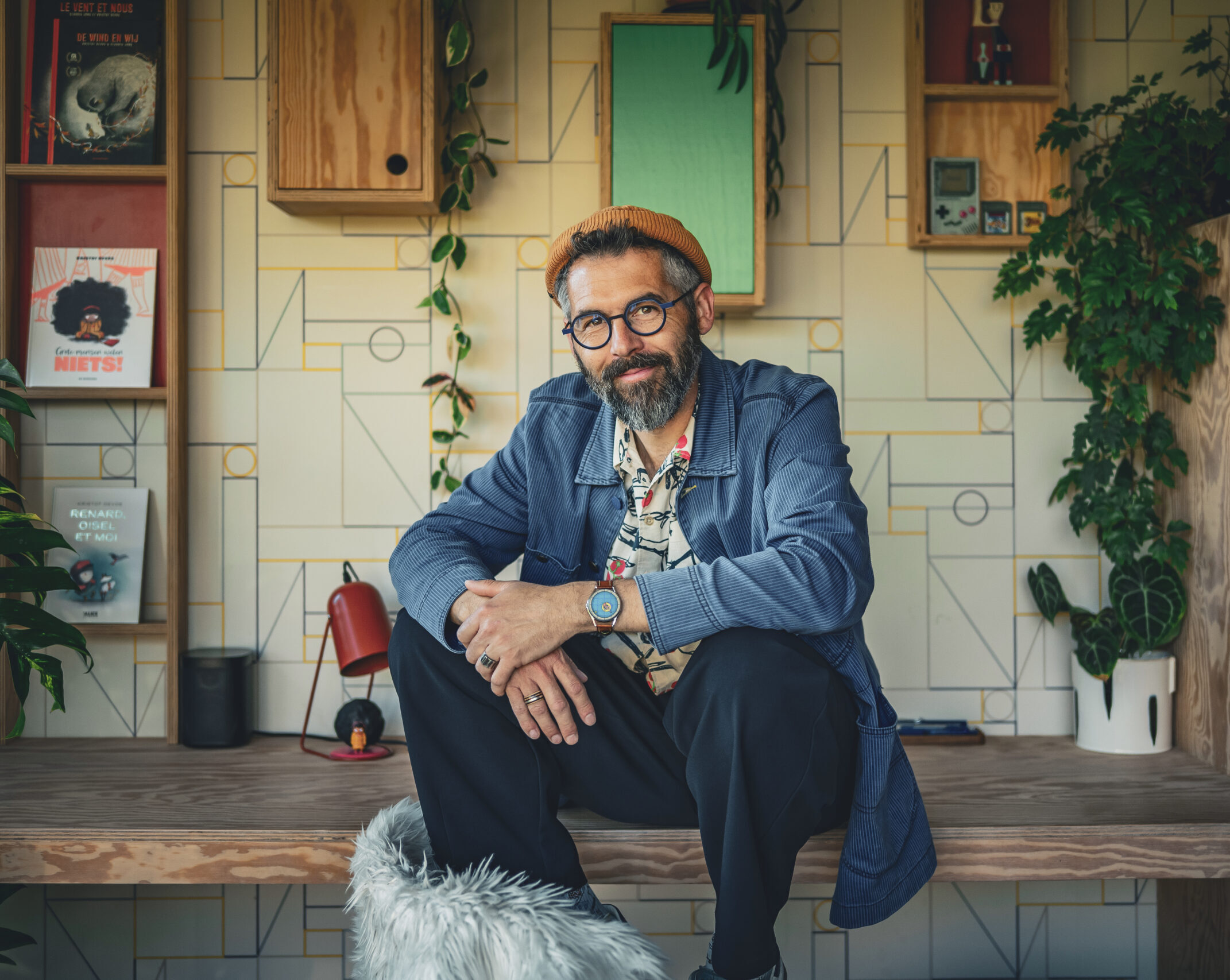
Kristof Devos S02/E31 — on Designing Watches That Tell You to Slow Down & the Art of Doing Nothing — another conversation about slowing down, resisting the hustle, and building a calmer creative life.