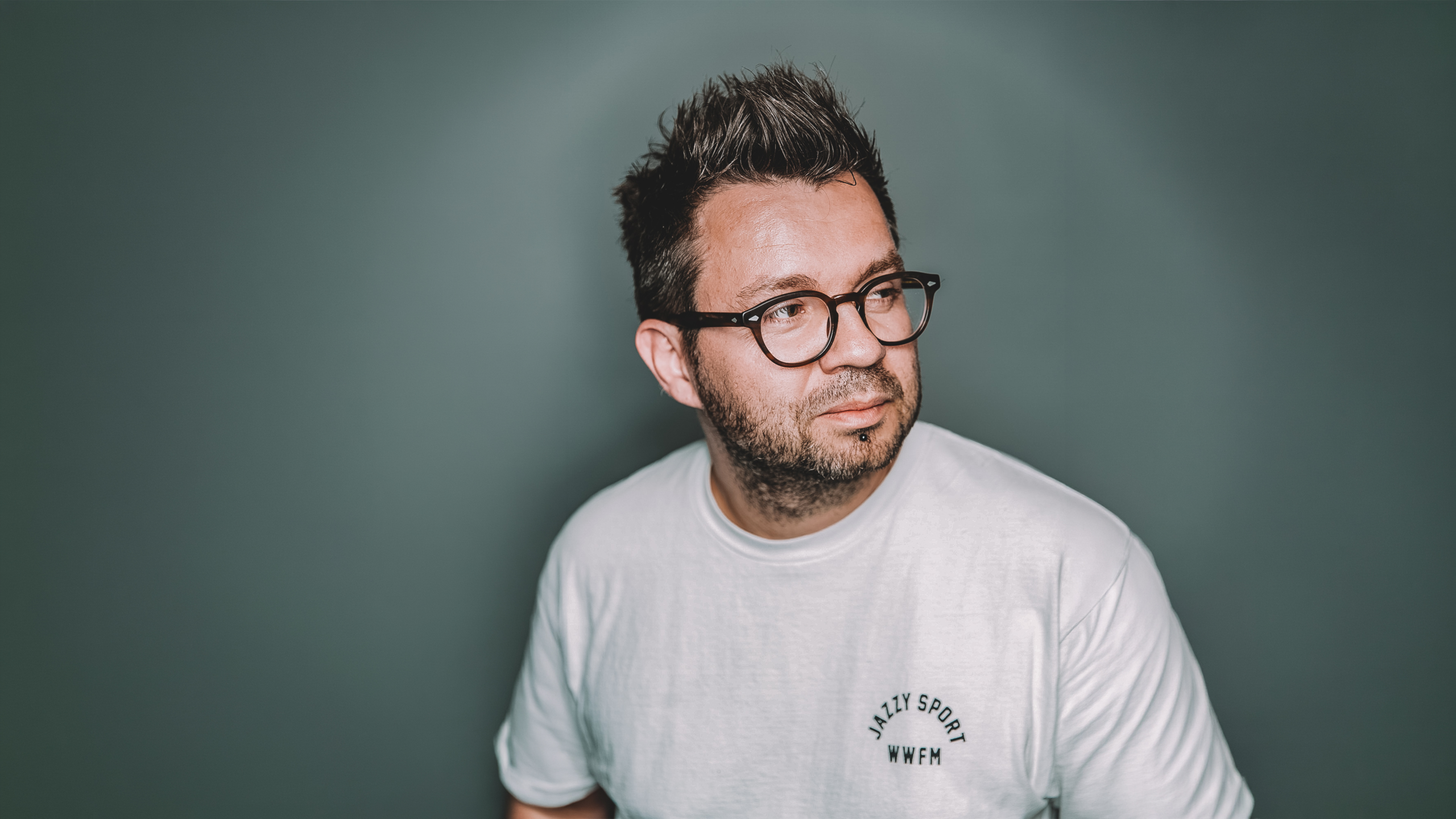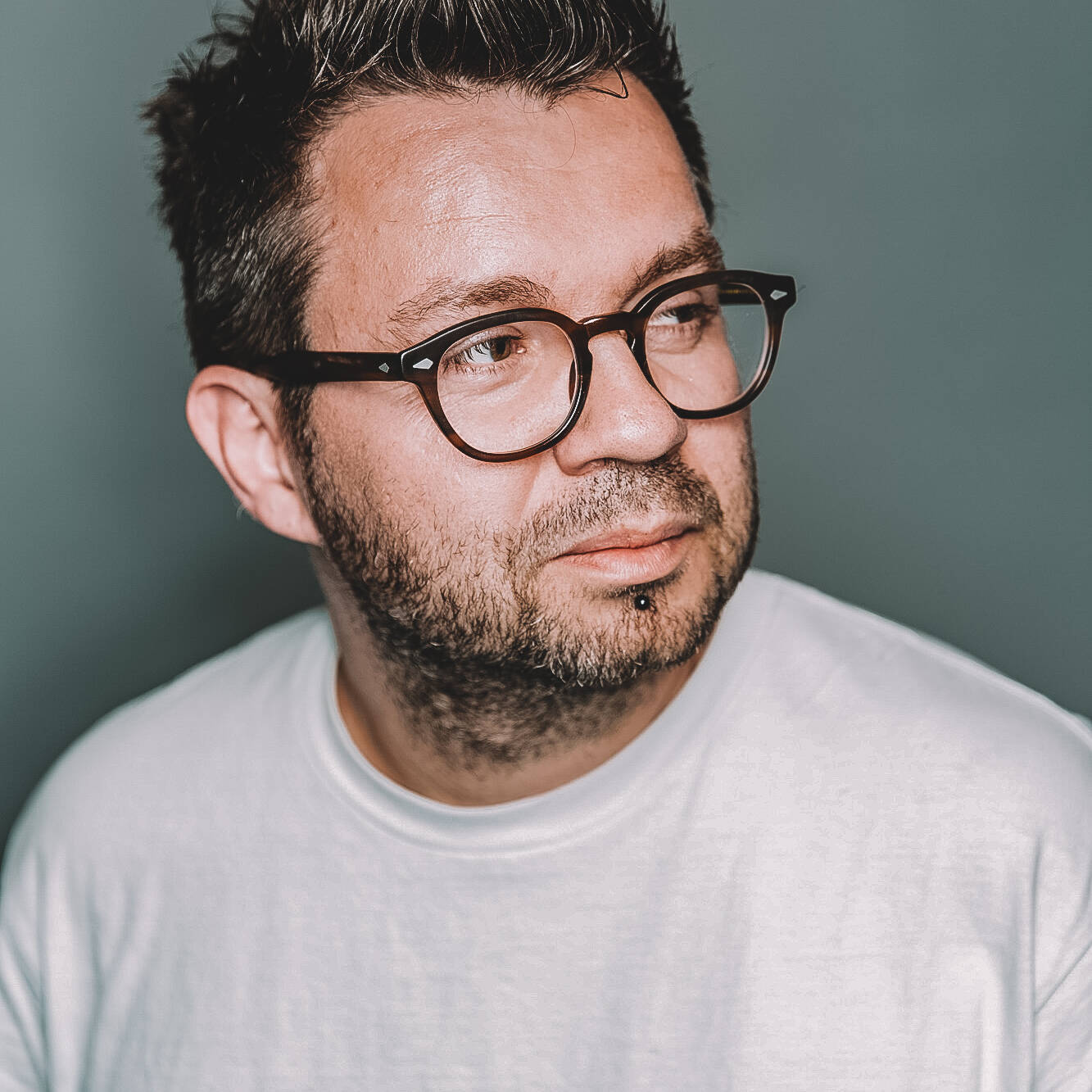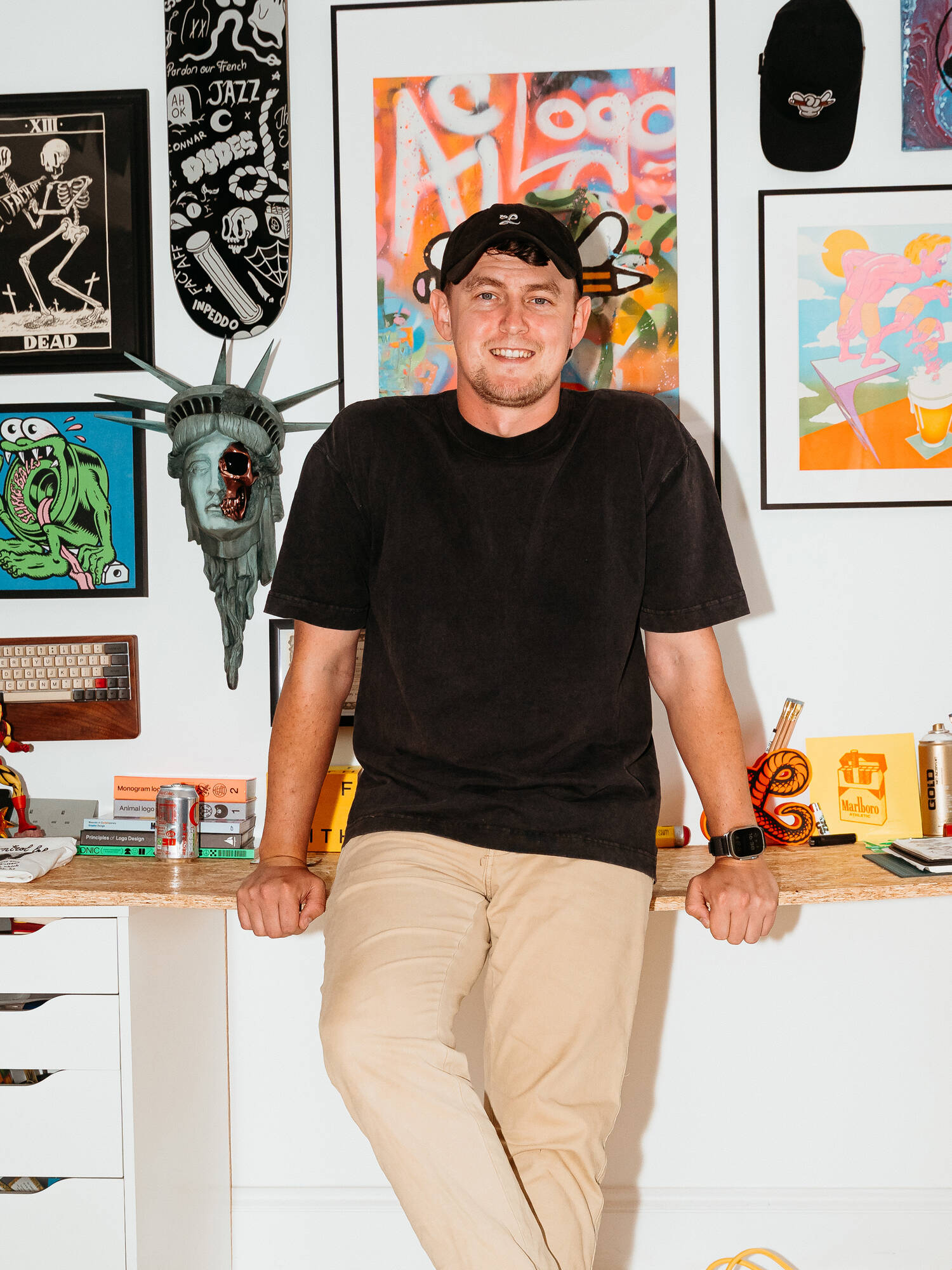
ABOUT HARALDUR THORLEIFSSONHaraldur "Halli" Thorleifsson is an Icelandic designer, entrepreneur and philanthropist. He founded the design agency Ueno in 2014, sold it to Twitter in 2021, and rebooted it in the AI era. He is also the founder of Ramp Up, a nonprofit that has built almost 2,000 wheelchair ramps across Iceland, and he was famously willing to pay one of the highest individual tax bills in Iceland after the Ueno sale.
Tune in wherever you get your podcasts /
Tune in wherever you get your podcasts /



Episode Description
Some guests arrive with one story. Haraldur Thorleifsson, or Halli as he goes by, arrived with about six. He’s the Icelandic designer who built the agency Ueno from nothing, sold it to Twitter in 2021, and then made a decision almost nobody makes: he structured the sale so that he’d pay as much tax as possible, in Iceland, on purpose. He’s the founder of Ramp Up, which has put almost 2,000 wheelchair ramps across his country. He makes music, he’s been in a film, he shares a studio with his artist wife, and about six or eight months ago, by his own count, he rebooted Ueno to work on design in the AI era. This was not the lightest conversation I’ve had on the show. It might be one of the most worth your time.
The tax nobody wanted him to pay
I had to start with the thing that first made me want to talk to him. When Ueno was acquired, Halli had tax advisors doing their job, which in that world means showing you how to pay as close to nothing as possible. Move to Dubai, they suggested. Move to Portugal. There are structures for this.
He said no to all of it. The main decision he made was that the taxes would be paid in Iceland, because Iceland is the place that gave him his opportunities in the first place. He grew up in a poor family. He has a disability. And as he put it, there are plenty of societies where someone starting from there would never have been able to build something eventually worth money. He believes in social equity, in people being able to become whoever they want no matter where they start, and he followed that belief to its obvious conclusion: if the system carried you, you pay back into the system so it can carry the next kid. In a world where everyone with money seems to be shopping for a flag of convenience, hearing someone explain the opposite, calmly, like it’s the most logical thing on earth, stays with you.
The world is a series of decisions
Halli was born with muscular dystrophy and has used a wheelchair for roughly half his life. One story he told me has been rattling around my head since. When he applied for a design job at an agency he’d admired for years, he decided not to tell them he used a wheelchair. He didn’t fully trust that they’d hire him if they knew. He got the job, and he was surprised that he did.
Years later, travelling, he noticed something that changed how he sees everything: accessibility is different in every city. Same century, same technology, wildly different results. Which means none of it is natural or inevitable. A step instead of a ramp is just a choice somebody made, or didn’t make. And once you start to see the world as a bunch of decisions people made or didn’t make, you realise you’re one of those people. You can influence the society and the institutions around you.
So when he came back to Iceland with some money and, maybe more importantly, some goodwill, he started the nonprofit Ramp Up. The first project was 100 wheelchair ramps in downtown Reykjavik, where the foot traffic and the old buildings are. It grew to almost 2,000 across the country. Now they’re targeting a thousand ramps in Ukraine and working in Panama City, because, in his words, it’s a relatively cheap way to make a huge impact for a lot of people.
I asked whether he thinks society is moving in the right direction on accessibility. His answer was honest: the general march of history is towards progress, with long dark periods inside it. He’s not telling anyone to be patient, because generations have waited whole lifetimes for things to get fixed. But zooming out helps him. There is progress. He wishes it were faster. He’s doing what he can to make it faster.
The Musk moment, from the inside
Most people outside design first heard of Halli in 2023, during his very public exchange with Elon Musk after the Twitter acquisition. I deliberately didn’t relitigate it, anyone can Google the details, and to me the details miss the point. What I wanted to know was how it felt to be at the centre of it, with half the internet calling you a folk hero.
His answer was more interesting than the drama ever was. Being on the inside of something you understand better than anyone, and then watching the world’s representation of it, taught him how far apart public perception and reality can sit. The news is not always an accurate description of what happens in the world. In the end, he says, the whole thing turned out quite well, and he’s generally happy with it. That’s all he needed to say about it, and honestly, it’s enough.
Building Ueno twice
Halli founded Ueno in 2014. Twitter acquired it in 2021. And roughly six to eight months ago, he brought it back. I asked him why, and his answer had two threads, and the first one was disarmingly honest: he was bored. His brain works overtime, and if he doesn’t have enough to work on, it tips into somewhere darker. Having a reason to get up in the morning, smart and dedicated people to talk to, a problem to chew on, that’s not a luxury for him. It’s maintenance.
The second thread was AI. He’s been in tech for almost 30 years, and towards the end of the first Ueno he felt the work had become copy and paste, the same solved problems over and over. AI has changed how products are made and how people use them, and he wants to be one of the people shaping that rather than watching it happen. The projects are in travel, dating, food delivery, some for big tech companies, some for startups.
What he said about the current state of AI tools stuck with me. Everything has converged on an almost entirely text-based interaction model, which suits people who love to read and quietly excludes everyone who doesn’t. He doesn’t believe this is where things end up. It feels to him like the early web, when everything was a simple HTML page, and the work now belongs to designers, engineers, and creative people: build new ways to interact with this beast.
And the part I loved most, because only someone who genuinely loves the craft says it out loud: what keeps him in agency work is being humiliated again and again. You ship something, the user does something completely different to what you expected, you pick yourself up and go again, over and over, until you finally have something that’s useful to people. Nothing he works on touches more people than that. That’s the whole job, and he still finds it fun.
What AI means for young designers
I asked where the creative industry lands in a few years, and he didn’t sugarcoat it. The entry-level jobs are going away first. Pre-AI, junior designers generated ideas and explored directions while senior people acted almost as editors, pulling the threads together. AI now does a lot of that early exploration, compressing weeks into minutes or hours. Which is kind of terrifying when you extrapolate, because if young people can’t get into the industry, where do the next senior people come from?
He’s also clear-eyed about the limits. Every time he takes a deep dive, he finds generative AI still isn’t good at quality interaction or product design. What it returns is not good, his words. It gets you to a starting point fast, and then the real work still has to happen. But his assumption is that it slowly climbs the chain, and he doesn’t pretend to know the endgame.
Sharing a studio with the opposite of himself
Behind Halli on our call was a wall of thread, fabric and handmade things, which turned out to be the perfect setup for one of my favourite parts of the conversation. He shares a studio with his wife, an artist who works across video, fabric, painting and drawing. He gets one small corner for his computer, and her things have taken that over too. He doesn’t mind. They’re beautiful.
What he admires in her is that she has, in his words, a much healthier attitude towards life. She makes things purely for the sake of making them and couldn’t care less what happens afterwards. He’s the complete opposite, and he owns it: he calls it his capitalistic point of view, he struggles to make anything that won’t be used or seen by a lot of people. Two creative lives, one room, running on entirely different fuel.
The decision that changed everything
Halli’s mother died when he was young. In New York, he drank heavily. He is, as he says plainly, an alcoholic, and there was a fork in the road: ride it to the extreme and probably not survive it, or stop. He was a functioning alcoholic, working the whole time, but he knew he’d never become what he could be, and he knew the relationship with the woman who is now his wife wouldn’t survive it either.
So he stopped. And everything changed. Within a year they were married and had their first child and moved to Tokyo. Within two years he’d started Ueno. He calls it the most impactful decision he’s ever made, and he’s careful not to make it sound inevitable. There was a pretty high likelihood, he says, that he would have just kept drinking. He’s grateful he had the strength at that exact moment, because in the moment, it wasn’t obvious at all.
Kids, independence, and the best film you’ve ever seen
Halli thinks people need to be challenged to grow, and he applies that in an unexpected direction: wealth. Some people use money to insulate themselves from the world’s problems, and he thinks that insulation quietly damages them. The same logic, flipped positive, is what children did for him. When people depend on you, you’re forced to deal with who you are, because if you don’t change the thing in yourself, it lands on the people you love most. A lot of the work he’s done on himself started exactly there.
He also gave me the best description of parenting I’ve heard on this show: a kid is like a drunk person at a party. Fun, exciting, completely unpredictable, doing stupid things constantly, and you’re responsible for them. The hard part is the decisions, when to step in and when to let them run into the wall, because sometimes the wall is the only teacher. What does he hope they learn from him? Independence and resilience. He believes independence, with all its burdens, is the source of happiness, because it lets you move through the world on your own instincts rather than what society thinks of you.
The sweater he can’t unravel
I asked Halli my usual closing question: if he had to delete everything he’s ever made and keep one thing, what stays? He’s the first guest who genuinely couldn’t answer, and his reason was better than any answer. Without the agency, there’s no money and goodwill to start Ramp Up. Without Ramp Up, there’s no co-working space, the one that now holds almost 600 creative people in Iceland and inspires him daily. Everything is so interwoven that if he starts pulling at those threads, the whole sweater comes undone. So he keeps the sweater.
And his advice to his eight-year-old self? He almost refused the question, because advice is hard and he probably wouldn’t have listened. But he said this: he was a very afraid child, and the fear never helped him in any way. If he could remove that fear from that child, he would.
Off script, that’s exactly where we ended up. Not the lightest conversation, and all the better for it.
— Alen
Haraldur “Halli” Thorleifsson is an Icelandic designer, entrepreneur and philanthropist. He founded the design agency Ueno in 2014, sold it to Twitter in 2021, and rebooted it in the AI era. He is also the founder of Ramp Up, a nonprofit that has built almost 2,000 wheelchair ramps across Iceland, and he was famously willing to pay one of the highest individual tax bills in Iceland after the Ueno sale.
Ueno is the digital design agency Halli Thorleifsson founded in Reykjavik in 2014. It grew to work with major technology companies before being acquired by Twitter in 2021. Halli relaunched Ueno recently to focus on product design in the AI era, working on projects in travel, dating and food delivery for both large tech companies and startups.
When Ueno was acquired by Twitter, Halli structured the sale so the proceeds were paid as salary, meaning he paid far more tax in Iceland rather than using offshore structures his advisors suggested. His reasoning was that Iceland’s social systems gave a kid from a poor family with a disability the opportunity to build something valuable, so he wanted to pay back into the system that carried him.
Ramp Up is the nonprofit Halli Thorleifsson founded to improve wheelchair accessibility. It began by building 100 ramps in downtown Reykjavik, grew to almost 2,000 ramps across Iceland, and is now expanding with a target of 1,000 ramps in Ukraine as well as work in Panama City.
Halli’s projects are collected at haraldurthorleifsson.com, his agency is at ueno.co, and he’s on Instagram at @haraldurthorleifsson and on LinkedIn as Haraldur Thorleifsson.
If you liked this episode, listen to...
Radim Malinic S02/E34 — on Creativity as Escape & Becoming More of Who You Already Are — Halli says creativity let him build a world he wanted to live in; Radim’s episode is the other side of that same coin.