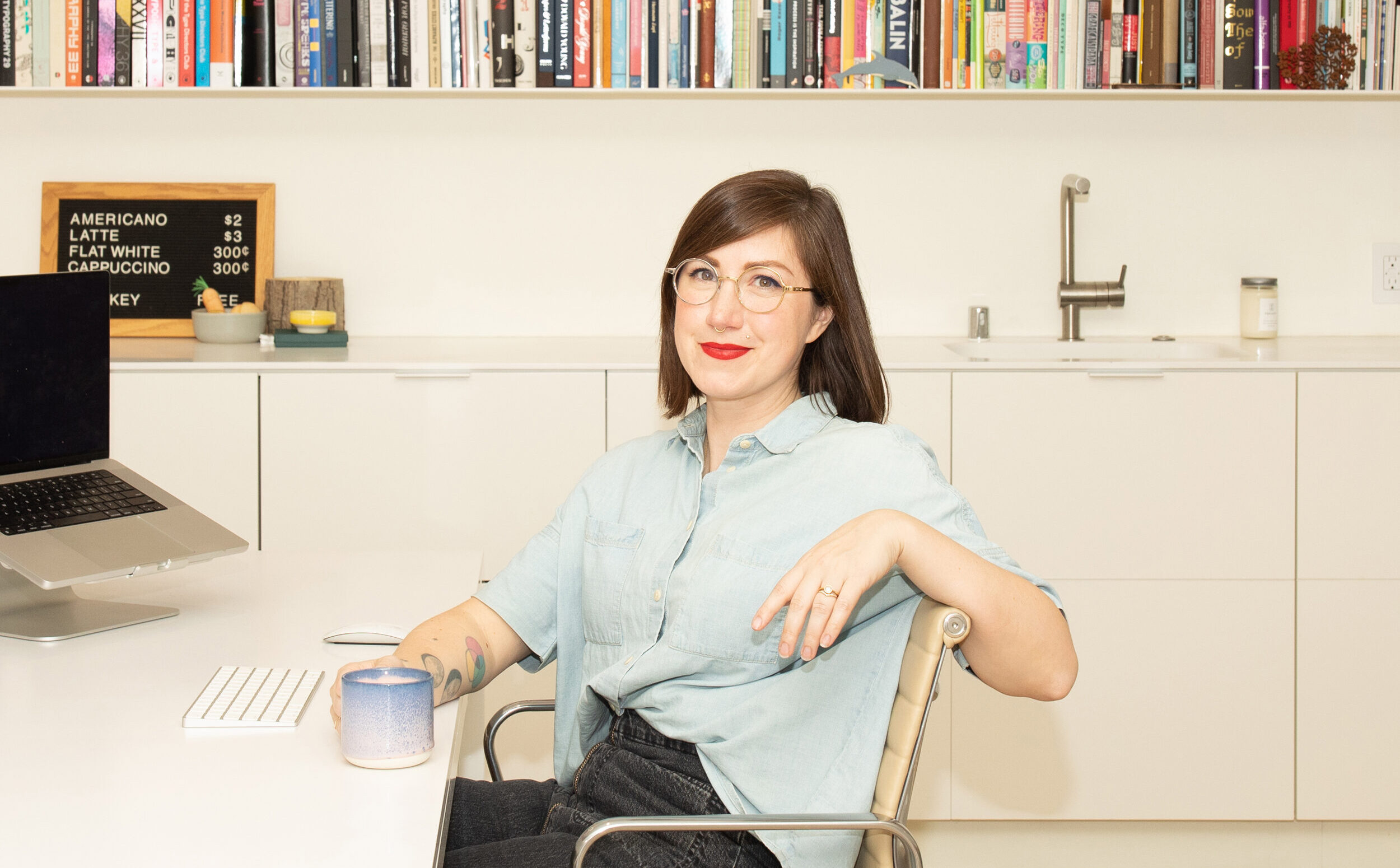
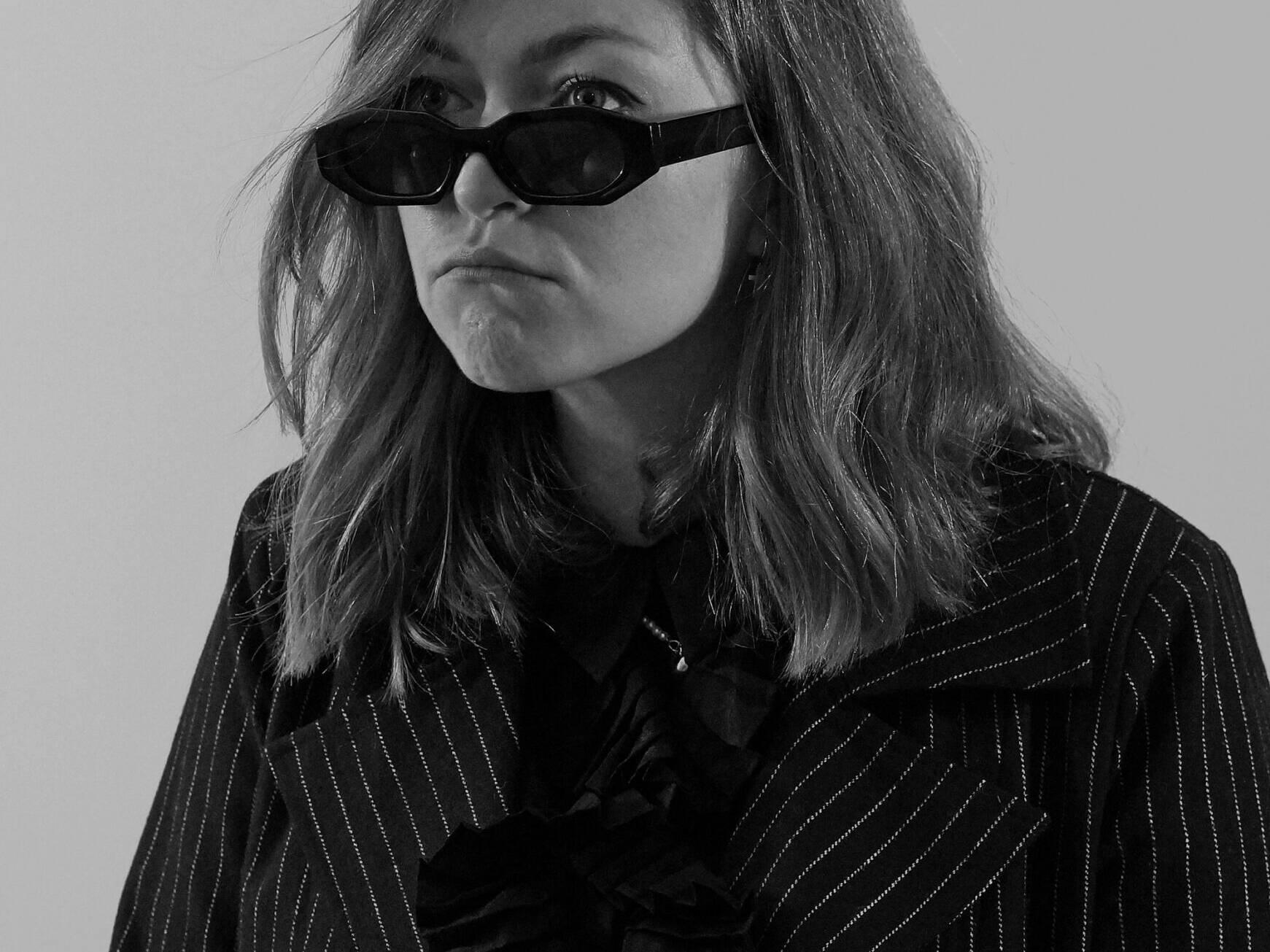
ABOUT GEMMA O'BRIENGemma O'Brien is an Australian artist and designer based in Sydney, known for her hand lettering, typography, large-scale murals, and fine art. She began in law before moving into design and typography, built an international career through speaking and commissions, and more recently studied neuroaesthetics, the neuroscience and psychology of art.
Tune in wherever you get your podcasts /
Tune in wherever you get your podcasts /



Episode Description
I’d been trying to get Gemma O’Brien on the show for a long time, and when we finally sat down, the hardest part was knowing where to start. She’s a lettering artist, a fine artist, a muralist, a letterpress printer by training, and most recently a student of neuroaesthetics. She’s painted a billboard in Times Square, had work acquired by a museum, spoken on stages all over the world, and she has a public Strava profile on her website, because running is as much a part of her as the lettering is.
If you tried to read out everything she’s done it would take half an hour. So instead we talked about how someone ends up doing this many things at once, and why she has no intention of narrowing it down.
A path she describes as intuitive
Gemma started in law. She dropped out, fell in love with design and typography, and that became the door into everything else. Design led to a fine art practice. The art eventually led her, twenty years in, back into a classroom to study the neuroscience and psychology of why we make art at all. She describes her whole path as intuitive, one thing quietly morphing into the next, always following the thread that felt most alive.
What ties it together isn’t a discipline. It’s her. Lettering, painting, murals, research, and a life built around movement and running and sunshine, all of it feeding the same practice.
Running to galleries
The Strava profile on her website was the first thing I asked about, because I’d never seen an artist list it next to Instagram and LinkedIn. A few years ago, Gemma told me, she thought about which platforms were actually close to her core identity. Instagram for the art, LinkedIn for the professional side, and then Strava, because running is genuinely a huge part of who she is. During the pandemic, when she had a bit of Instagram fatigue, she even used Strava to share behind-the-scenes notes about her art that almost nobody was following. She started running to art galleries, the two halves of her life merging, and decided to just put it out there. If it connected with people, it was true to her. She’s run two marathons, teaches spin classes, and writes diary-style entries somewhere between ultra running and ultra artist.
The video she made by accident
In 2008, Gemma uploaded a video to YouTube. Not to go viral, a concept that barely existed yet, but so her course tutor could access it without her having to send a huge file. It was a university project, and it quietly ended up in the public domain at exactly the right moment. A German design blog wrote about it and invited her to speak in Berlin. At twenty, almost by accident, she was catapulted into the international design world.
She used to call that video cringe and the younger version of herself an idiot. She’s softened on that. Looking back, she sees a twenty-year-old who was simply exploring and expressing herself with the tools she had, and she has more respect for young Gemma now. Her advice to younger designers comes straight from that experience: the antidote to the fear of new technology and change is to play, try things, and see what comes out.
Going back to school after every dream came true
Here’s the part that stayed with me. Just before the pandemic, Gemma moved into her dream studio. She bought her own scissor lift. She’d ticked off the career goals most artists only fantasise about, a Times Square billboard, a museum acquisition, the lot. And then she found herself standing in all of it, asking what she was missing.
What she was missing, she realised, was growth, and a connection to the real world beyond her own studio. She’d done the work on herself. She wanted to use her brain differently and be challenged by ideas she didn’t already have. So she found a course in neuroaesthetics, made the decision more or less on a whim, and went, swapping conference stages in front of thousands for small group assignments marked by tutors. She says she likes to learn the hard way. It was painful, being a student again in a new city, surrounded by neuroscience and statistics she had no background in. She has no regrets about it, and she thinks the real impact of it on her work is still to be revealed.
Getting bored of herself
I asked Gemma whether she still gets nervous before going on stage, and her answer was one of the most honest things anyone’s said on this show. For years, from about twenty-one to thirty-five, she didn’t really feel fear. The nerves fuelled her. But more recently she’s noticed a different feeling the day before a talk, and when she dug into why, she landed on something uncomfortable. She was almost bored of herself.
Even though her story was new to every audience, she wanted to feel fresh telling it. She wanted to be excited by her own ideas again. That, as much as anything, is why she went back to study, to have something richer to share than just her own experience. She’s writing a new talk now, and she’s curious whether the nerves will change once she’s saying something that feels new to her too.
Where the lettering came from
For all the directions she’s taken, lettering was the first intense love, and as a type designer myself, I wanted to know where it came from. It was a few things at once, she said. The move from law into a creative space after years of feeling restrained. A new city, Sydney, full of signs, after a childhood spent looking closely at plants and flowers. An apprenticeship as a letterpress printer at her university. A teacher who was passionate about typography. And underneath all of it, a family of word people and her own deep love of language. She filled sketchbooks with lettering while listening to song lyrics, obsessed with the history of fonts, in a corner of the world that felt entirely her own.
COVID, and a forced pause
The pandemic hit Gemma two ways. On one side it was almost utopian: a period of forced isolation in the studio, no travelling, time to reflect and work slowly, to be in nature and close to friends and family. She even asked her agents to clear three months of commercial work so she could focus on an exhibition without interruptions. But the other side was harder. So much of her work involved travelling to paint, and the slowdown landed right when her momentum had been building for years. A blessing and a curse, she said, but the reflection it forced shaped everything that came after.
Refusing to pick one thing
Most successful artists are told to find their lane and stay in it. Gemma has built her whole working life on the opposite. She paints, she letters, she teaches spin classes, she runs, she studies, she does commercial work and gallery work and a wallpaper collection, and she insists on keeping all of it going at once.
It’s partly strategic. Shifting between disciplines keeps her physically alive and stops her getting stagnant. She talks about being a bodily person, needing to move between a park bench and a wall and a sketchbook rather than sit at one computer all day. She’s learned to put time pressure on herself, a forty-five or ninety-minute window, so she does precise work and comes back with fresh eyes instead of overcooking something. There’s a part of her that wonders what would happen if she just did one thing. But she knows her personality now, and she loves a harmony of things happening at once, so that’s the path she’s staying on.
She’s also made peace with the boring parts. For a while she resisted them, feeling that if this was her passion, all of it should be fun. Now she sees the admin and the small tweaks and the unglamorous middle of every project as part of the deal, and getting good at them as part of the craft. She uses AI in small, unlikely ways too, copy-editing a concept note or cross-checking an idea, while still sketching in pencil and switching between analogue and digital by hand. To live a creative life at all, she said, is a luxury.
Still forgetting what she’s done
Even with that career, Gemma still feels imposter syndrome, and she’s clear that everybody does. To her it’s almost a good sign. If you’re aiming to make beautiful, useful things, comparison and even envy come with the territory, and that discomfort is proof your creative spirit is still alive. The trick is perspective, and having your own definition of success rather than measuring yourself against the best of the best you can now see at all times online.
The thing that struck me most was that she forgets her own achievements. Hearing me read her career back to her, she said, she sometimes can’t quite believe it’s hers. It takes an old journal, or someone reminding her of a project, to recognise it. There was a dream she had in London, after grieving the loss of her old studio, where little Gemma, the six-year-old who made small books, came and saw the life she’d built. That’s where community comes in, the people who reflect your work back to you and celebrate it with you when you’ve forgotten it yourself.
The one thing she’d keep
I ended where I’ve been ending a lot of these conversations, by asking what she’d keep if she had to destroy everything she’d ever made and leave just one thing. She called her own answer corny, and then gave the best one I’ve heard. Not an artwork. The word she’s been commissioned to write more than any other, in calligraphy and illustrated type, over and over, is love. What she’d keep isn’t a piece. It’s the idea underneath all of it, the power of words. That, she said, would be her legacy.
We’re hoping to finish the rest over coffee in Spain later this year. With Gemma, I get the feeling there’s always more.
— Alen
Gemma O’Brien is an Australian artist and designer based in Sydney, known for her hand lettering, typography, large-scale murals, and fine art. She began in law before moving into design and typography, built an international career through speaking and commissions, and more recently studied neuroaesthetics, the neuroscience and psychology of art.
Gemma O’Brien is known for large-scale lettering and mural work, including a billboard in Times Square during the pandemic and a museum acquisition of her work. She has spoken at design conferences around the world, worked across calligraphy, painting, and installation, and is recognised for merging typography with fine art.
After achieving long-held career goals, including a Times Square billboard and a museum acquisition, Gemma O’Brien felt she had lost her connection to the real world and needed growth. She enrolled in a course in neuroaesthetics to be challenged by new ideas and to have something richer to share on stage than her own personal experience.
Neuroaesthetics is the study of the neuroscience and psychology behind how humans create and respond to art. It explores questions such as why we make art, how the brain processes aesthetic experience, and what drives creativity, drawing on neuroscience, psychology, and philosophy.
Yes. Gemma O’Brien has said she still experiences imposter syndrome despite a long and successful career, and that she believes everybody does. Her view is that comparison and even envy are signs your creative spirit is still alive, and that the antidote is keeping your own definition of success and being surrounded by a community that reflects your work back to you.
If you liked this episode, listen to...
Jessica Hische S02/E21 — I’m Already Living the Life Millionaires Dream Of Having Someday — another lettering artist on building a creative life on her own terms, and why imposter syndrome never fully goes away.