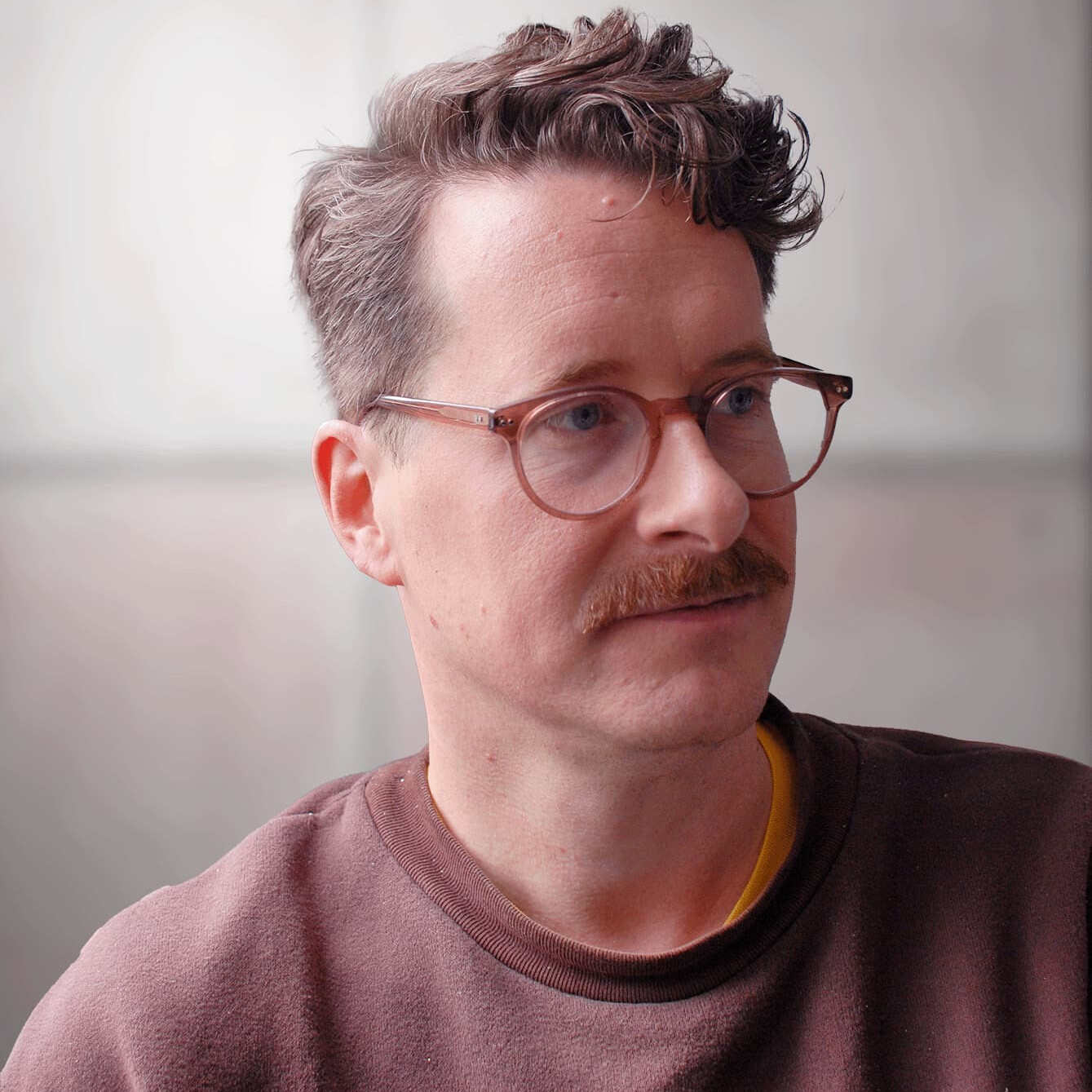
Luis Mendo is a Spanish illustrator, former magazine art director, and founder of Mundo Mendo — a personal creative membership project based on illustrated stories, dispatched directly to readers with no platform in between. Born in Salamanca, he spent 20 years in Amsterdam before moving to Japan, where he has lived for 14 years. He and his wife ran Almost Perfect, an artist residency in Tokyo, for six years. He also curates The Illustrated, a free newsletter highlighting emerging illustrators. He is currently based in Karuizawa.
Tune in wherever you get your podcasts /
Tune in wherever you get your podcasts /



Episode Description
He grew up in Salamanca. Studied in Madrid and worked shortly in Barcelona. Spent 20 years as an art director in Amsterdam. Then his father died, and he boarded a plane to Japan for a sabbatical. He now lives in Karuizawa, an hour from Tokyo, with his wife, his daughter, his cat Señor, and a creative practice so intentional and personal that the only people it serves are the ones who choose to pay for it.
Luis Mendo is a Spanish illustrator, former art director, and founder of Mundo Mendo – a membership project built on personal illustrated stories, dispatched directly to readers with no algorithm in between. This conversation is about a career that has refused, at every stage, to be what someone else needed it to be.
From Salamanca to Amsterdam to Japan – I Choose Happiness
Luis was born in Salamanca, the ancient university city of Castile. He studied design and illustration in Madrid, then Barcelona, then found his way to Amsterdam – where he spent the next 20 years as a specialist in magazine design, art directing for some of the most respected editorial publications in Europe.
He was good at it. He was known for it. And then his father died.
“My dad died mainly because stress became a health problem and the health problem brought him death. I looked at my life when he passed away and I thought – I’m doing exactly the same. I’m unhappy, I’m stressed, I’m not in a place I want to be.”
He took a sabbatical. Three months in Japan. He boarded a Japanese airline at Schiphol and fell in love before he landed – the cleanliness, the calm, the smell, the food, the way people moved.
“I heard this about many people who visit Japan for the first time. They say it’s the only place in the world where they feel safe. Where they don’t feel stressed.”
He came back to Amsterdam. Tried to re-adapt for four years. Couldn’t. The city had changed. Or he had. Probably both.
“Either way I choose happiness. I choose to find an environment where I feel better. Whatever the reason – try to change your circumstances so you’re a better, happier person.”
He spent four years doing what he calls “fishing” – sending emails to Japanese contacts, offering to design logos in exchange for flights, arriving in Tokyo for weeks at a time, building connections, eventually landing a creative director contract with the Pecha Kucha organisation in exchange for a visa. That’s how you carve your way into a country with no existing right to work there.
He’s been in Japan for 14 years. He now lives in Karuizawa, a mountain town known for clean air and jazz festivals, because Tokyo summers with a small child proved too much. He goes back to Tokyo constantly. He still loves it. But Karuizawa is home.
Almost Perfect – Six Years of Opening the Door
For six years in Tokyo, Luis and his wife ran Almost Perfect – an artist residency from their own home. A spare room, a gallery downstairs, creatives coming and going from around the world. Illustrators, photographers, writers, dancers, coders, entrepreneurs. Everyone welcome.
“I was kind of missing the editorial feeling – new people coming in and out, photographers, illustrators, writers. So we thought, let’s do something where people come and we have new friends every month.”
He was the funny one. She was the serious one – managing money, logistics, planning. He did creative direction and showed people where to buy good pens.
Six years later, the house needed repairs, they had a child, they were both still running their own careers simultaneously. Enough. They closed it.
But before they did, they wrote a book – a guide for anyone who wants to do it.
“So many people told us, we wanted to come. I said – read the book, just do it yourself. Here’s how we do it. You can do it too.”
Why Social Media Is Dry Disgusting Bread
The most quotable moment of this conversation comes when Luis describes why he left social media as a primary creative output.
“As illustrators, what we are doing on social media is creating salami. You have Instagram, and advertising is the bread – dry and disgusting. And the salami is the good stuff. We are creating the good stuff and giving it to Mr. Zuckerberg. I thought – this is stupid. Where is the point?”
The more time passed, the more meaningless the follower count felt. The more hollow the likes. The more irritating the algorithm that decides who sees what you made, based on criteria that have nothing to do with the quality of the work.
“There is no value in having many followers or many likes. It’s just empty.”
He had spent 20 years putting his creative energy into other people’s editorial projects. He knew how to build something. He just didn’t want to build it for someone else anymore.
Mundo Mendo – Building Something That Outlives You
Mundo Mendo started as a search for an alternative. He looked at Craig Mod’s membership model. He spent a year testing systems – WordPress, Patreon, Substack – before settling on Ghost, a non-profit platform that lets you host your own content on your own server, with no investors, no algorithmic manipulation, no data harvesting.
“I’d pay Instagram, not to have ads and not to use my data. But they don’t want that. They prefer to manipulate you. These guys are the opposite. Your stuff is yours.”
He started posting personal illustrated stories. Interviews with friends. Sketches. Thoughts. Then after six months he realised the archive was becoming something worth holding. He printed a thousand numbered and signed books. He bikes them to the post office himself, in rain and sun, and ships them to members anywhere in the world.
“People pay me to draw, which is a complete honour. I think it’s fantastic. And I want to give them something.”
But the deeper motivation for Mundo Mendo is something more lasting than membership numbers. Luis is approaching 60. He thinks about what he will leave behind. Client work disappears into digital files. Magazine issues get pulped. But a book – a physical, numbered, signed object – survives.
“I want to have something that when I die, people say this is a Luis Mendo book. This is my humble, small way to do that.”
His favourite story in the first book is page 220 – the account of a family holiday in Spain, the first time his son and his daughter spent significant time together. He reads the opening aloud in the episode. It is, by some margin, the most personal thing in the conversation.
“This summer we went to Spain and had a holiday with a complete family for the first time.”
He was constipated for a week beforehand from the anxiety of it. It went beautifully.
The Value Question – What Young Creatives Get Wrong
Luis spent 20 years hiring as an art director. He has a precise and considered view of what makes young creative work visible – and it has nothing to do with Instagram reach.
“I see many illustrators in Japan. They draw anime characters and they do it very well. But I say – listen, this is no value. The value in it is very little. But if you use your drawing skills to draw something else, to draw with a different approach – you create value.”
The value, he argues, is already inside you. It is not something you borrow from a trend, a style, or a platform. It comes from what you genuinely love, what you know better than anyone else, what makes your perspective specific and irreplaceable.
“I would say to all young people starting – try to find your value. What is it you can bring to the table.”
He also has a firm position on art directors who post “looking for an illustrator” on social media.
“If you’re an art director, it’s really bad. Do your bloody homework. Keep an eye on foundries. Buy books. Read the blogs. That’s what you should be doing. You have so much time wasting on bullshit.”
He doesn’t exempt himself from this. When he was an art director, he made himself learn photography – not his strength – by talking to photographers, asking what makes a great image, following the accounts of people he respected and then following who they followed.
AI Is for Laundry
Luis has a clear and funny position on AI that he summarises without hesitation.
“AI is to make the laundry. Not to design the clothes. To wash them, iron them, do the things you don’t want to do.”
He uses AI to automate the administrative side of Mundo Mendo – tracking member payments, shipping notifications, managing spreadsheets. He used Claude Code to improve his website, asking it to adjust typefaces and letter spacing without having to learn CSS.
“This is what you should use it for. The boring work. The drawing – man, please. That’s mine.”
“This is the beauty of humans. We have the power of connection.”
Watching Japan Rediscover the Physical
One of the most surprising parts of this conversation is Luis’s observation about what’s happening in Japan’s independent publishing scene. Commercial magazine circulation has been falling for five years. But the homemade print scene – artist books, zines, independent magazines sold between friends – is growing exponentially.
The Tokyo Artbook Fair now runs twice a year because a single edition was no longer big enough to hold it.
“If you go to these fairs, you talk to everybody. You are in front of this little table with books, comics, magazines, photography. And you can talk to the maker. There is such a beautiful beauty in that contact that we don’t have online despite everything.”
His conclusion is simple: the more digital life becomes, the more people crave the physical, the handmade, the tactile. The two things grow together, not in opposition.
Key Takeaways
For creatives still building social media audiences as their primary strategy: Social media reach has collapsed for most accounts. The algorithm is not on your side. Building something direct – a newsletter, a membership, a physical object – gives you a relationship with your audience that no platform can take away.
For young illustrators trying to get noticed: The question is not how to get seen. The question is what value do you bring. Find the intersection of what you genuinely love and what no one else is doing quite the way you do it. That’s where the work starts.
For creatives approaching a career transition: Sometimes the catalyst is grief. Sometimes it’s exhaustion. Sometimes it’s four years of trying to re-adapt and failing. Whatever it is – when you know, you know. Choose happiness. Then carve your way in, one email at a time if necessary.
For anyone building a membership or subscription: Start before you feel ready. Build the archive first. The format reveals itself as you go. And if you can send people physical objects yourself – bike to the post office if you have to – the personal connection is worth more than any algorithm.
For creatives worried about legacy: Client work disappears. Social media posts disappear. Books survive. If you have something to say – say it in a form that can be held, numbered, signed, and put on a shelf.
Luis Mendo is a Spanish illustrator and former magazine art director based in Karuizawa, Japan. Born in Salamanca, he spent 20 years as an art director in Amsterdam before moving to Japan 14 years ago. He is the founder of Mundo Mendo, a personal creative membership project built on illustrated stories sent directly to subscribers, and previously ran Almost Perfect, an artist residency in Tokyo, for six years.
Mundo Mendo is a personal creative membership project founded by Luis Mendo, built on the Ghost platform, through which he publishes illustrated personal stories and dispatches them directly to subscribers with no social media algorithm involved. Members receive access to the archive of stories and a yearly numbered and signed physical book, which Luis personally wraps and bikes to the post office for shipping.
Luis Mendo left Amsterdam for Japan following the death of his father, whose stress-related health decline prompted him to reflect on his own lifestyle. After a three-month sabbatical in Japan, he spent four years trying to re-adapt to Amsterdam before making the permanent move. He describes the decision as choosing happiness – deliberately changing his environment to become a better and more fulfilled person.
Almost Perfect was an artist residency run by Luis Mendo and his wife from their home in Tokyo for six years. They offered a spare room and a gallery space to visiting creatives from around the world – illustrators, photographers, writers, dancers, musicians, coders and entrepreneurs – in exchange for creative companionship and community. The residency closed after six years, and Luis wrote a guide for anyone who wants to run their own version independently.
Luis Mendo describes social media as “dry, disgusting bread” – the platform that surrounds and monetises the creative work (“the salami”) that creators produce for free. He argues that posting on social media gives your best creative energy to platforms that profit from it algorithmically, while the creator receives little in return. He recommends building direct relationships with audiences through newsletters, memberships, or physical objects instead.
uis Mendo advises young illustrators to focus on finding the value in their work – the specific perspective, subject matter, or approach that makes their output genuinely useful or meaningful to someone – rather than chasing followers or visibility. He argues that the value is already inside the creator and comes from what they genuinely love, and that this is what art directors and clients are actually searching for when they hire.