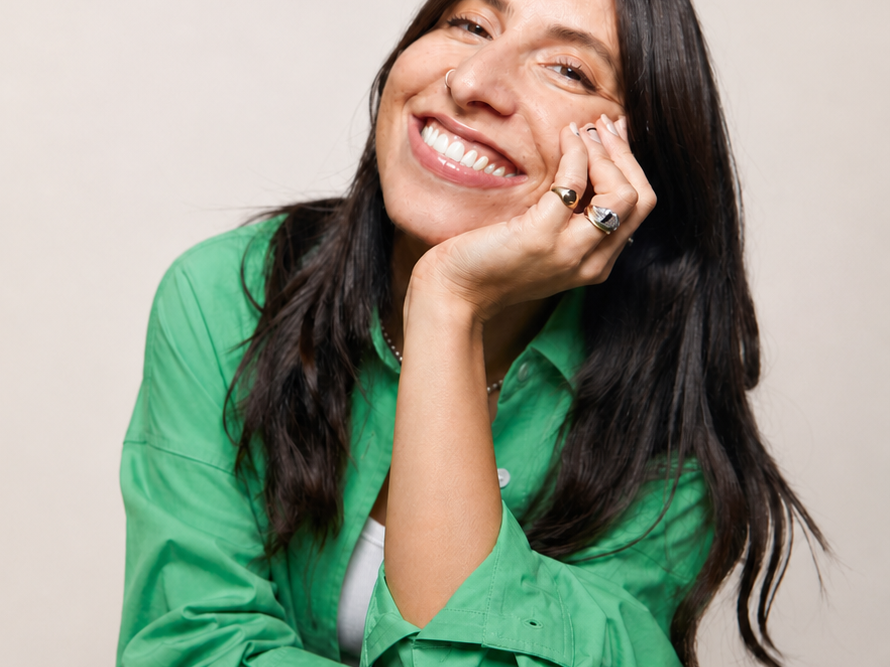
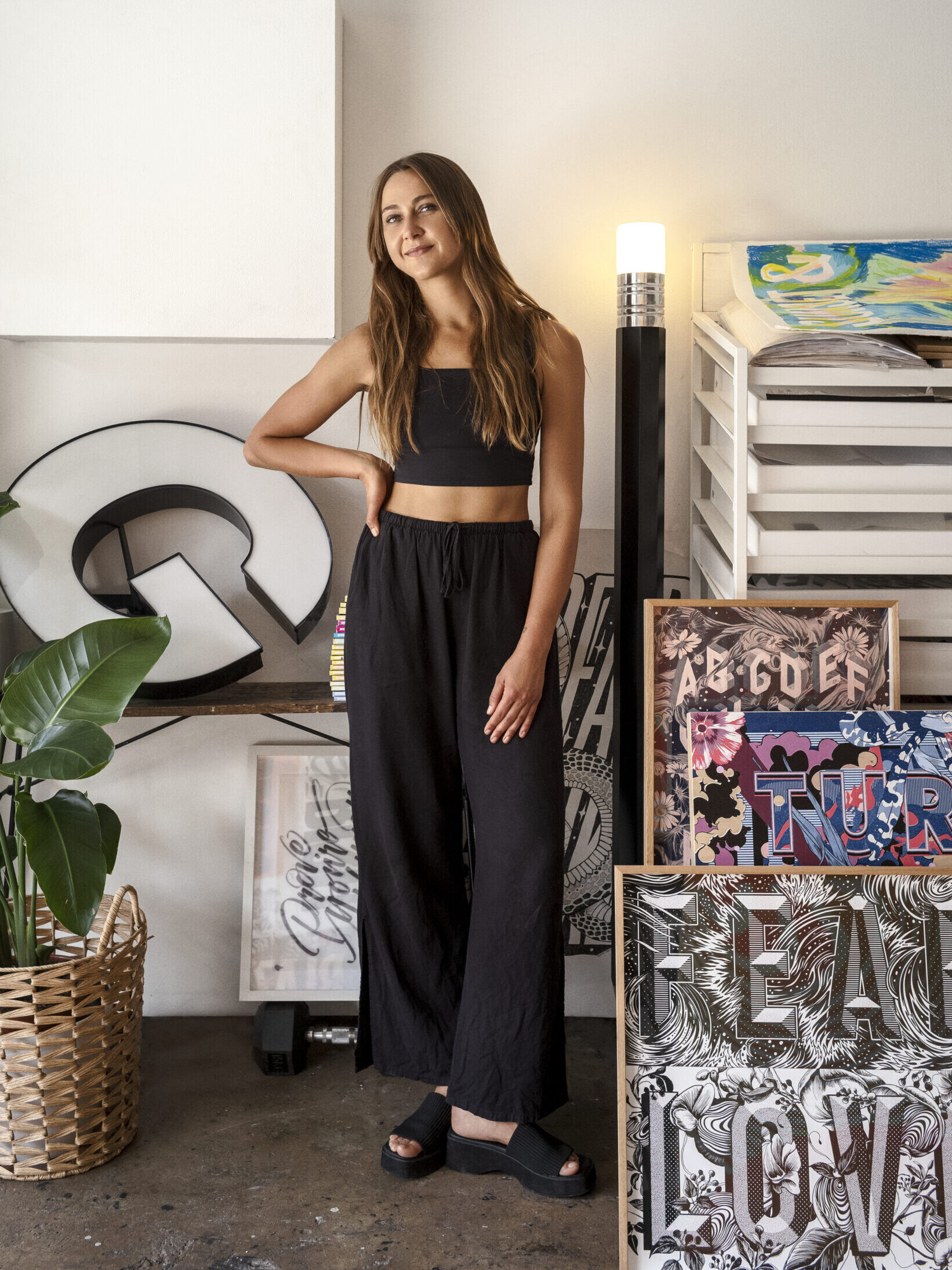
ABOUT SOPHIA YESHISophia Yeshi is a New York-based illustrator and artist whose bold, colourful, inclusive work celebrates Black women, women of colour, and the queer community. She has collaborated with Google, Spotify, Instagram, Adobe, UPS, Goody, and many other major brands. She teaches on Skillshare, including her course Design Your Feelings, and is currently expanding into home décor.
Tune in wherever you get your podcasts /
Tune in wherever you get your podcasts /





Episode Description
She taught herself Photoshop at 12 on back-to-back 30-day trials. She got into five art schools and couldn’t afford a single one. She moved to New York with no safety net and no plan B. And then her artwork went around the world on a UPS box — and she realised she’d been preparing for that moment her entire life.
Growing Up with Multiple Identities
Sophia was born in California but grew up in Baltimore, raised in a household that was genuinely unlike most. Her grandfather — Polish and Sicilian — ran a used bookstore selling rare psychology and psychiatry texts, including first-edition Sigmund Freud books. Her grandmother owned a store selling extravagant church hats and bedazzled suits. Her dad is Pakistani. Her mom is Black and white, and queer. By the time Sophia was in primary school, she had already been exposed to more cultures, religions, and ways of living than most people encounter in a lifetime.
But growing up across multiple identities also meant being othered early.
“On the Pakistani side, my family wasn’t the most excited about me being born. A lot of my early life was kind of shaped by rejection. I was immediately othered in a way — this person with all these different identities is not typical, it’s not normal. And I knew that from an early age.”
Rather than pushing her towards conformity, that early experience of not fitting the norm did the opposite. It made Sophia unapologetic about who she is.
“I already was not the norm. So I just think that also causes me to be unapologetic about who I am. I don’t think too much about what other people are going to say or think.”
She grew up too fast — she knows it, says it plainly, and tells a story about being six years old confiscating her great-grandfather’s cigars and making him drink a glass of water before he could smoke. A child policing a grown man’s substance use. She wasn’t supposed to even understand what that meant.
“When I think back on that story, I’m like, there’s no reason why I should have been that aware of what substances do to you. I should not have even been thinking about that. And so that is a perfect example of how I grew up.”
Photoshop, Neopets, and 30-Day Trials
The creative spark came at 12, sitting alone at a computer as a latchkey kid while her parents worked. She discovered Photoshop — and immediately knew that was the direction she wanted to go.
There was just one problem. The software cost $600 at Best Buy. She asked her mum, carefully leaving out the price. Her mum came home with a library of clip art instead.
“I was so mad. So I just had to continue making new email addresses so I could keep getting the 30-day trials.”
She taught herself everything on those trials — photo editing, design, the early Neopets community aesthetic of painted brush splotches and cut-out magazine models. She was coding before MySpace existed. And she was doing it with zero formal guidance, zero industry connections, and zero idea that there was a career path waiting for her on the other side of it.
By high school, she had found her way to a magnet school with a graphic design programme, a printing press, and a lamination machine. She was finishing entire InDesign chapters in a week while her classmates were still on the first lesson.
“My teacher liked me because I was just super ahead of the class. I would finish the entire chapter in like a week and she’d say, well, you can just keep going.”
Accepted to Five Art Schools. Couldn’t Afford Any of Them.
Sophia applied to five respected art institutions — VCU, MICA, CIA, SVA, and one other — and got into every single one. VCU was her first choice. She visited. She fell in love with the programme.
And then she did the maths. Thirty to forty thousand dollars a year, with no financial aid to cover it. She wasn’t taking out student loans. She told her dad she wasn’t going to college. He told her she had to figure it out.
She was literally in the shower listening to Spotify when an ad for the University of Baltimore came on. Most known for its law school, it had recently launched an undergrad graphic design programme. Instant decision day — apply and get accepted the same day. She walked into the financial aid office, told them she was a designer, and walked out with a full scholarship, a job as the department’s in-house graphic designer, and a semester refund that let her actually live.
“Rejection is redirection. As someone who used to be really afraid of rejection and really affected by it, I’ve gotten more comfortable with it. I would have been a graphic designer no matter what. Whether I went to that school or not, I think I would have ended up in the same place one way or another.”
Moving to New York with No Safety Net
In 2019, Sophia moved to New York with a clear vision and no safety net. She applied to jobs for eight months. One interview. Didn’t get it.
So she started posting. Not reels, not content strategy — just illustrations. Colourful, personal, bold. She built a separate Instagram for her artwork. She applied for the Adobe Creative Residency. She thought carefully about which brands she wanted to work with and started reaching out. A college friend commissioned her for Refinery29 — one of the publications she’d always wanted to be in. Then Adobe reached out for Adobe Live.
“I had no idea how I was going to get to the next thing or how I was going to pay rent. But as long as I could get one project, I could get one more project. And that was really how I took it.”
Then COVID hit. She spent three months in Maryland, binge-watching Game of Thrones for eight hours a day and building her print shop on Squarespace. When the George Floyd protests happened, a fellow illustrator’s post featuring five Black illustrators to follow went viral — and Sophia’s account went from 1,200 followers to 15,000 in a week.
She felt conflicted. Was it the work, or was it the moment?
“Projects were picking up, brands were hitting me up — but that had already started happening prior to that event. So I didn’t necessarily think it was a result of that.”
The UPS Box That Went Around the World
Of all the brand campaigns Sophia has worked on, one stands out as the moment she understood the real power of what she was doing.
The Martin Agency approached her to create artwork for a UPS Express campaign. She was the first artist ever to have her work on a UPS box. She didn’t fully understand the scale of it at the time.
“I didn’t understand that that was going to be like on the news. I was just used to my projects coming and people being like, that’s cool, and then moving on.”
But this one didn’t move on. It went around the world. People were photographing boxes. Strangers were posting about packaging.
“It’s a box. At the end of the day, people are like posting a box and they’re excited about it. And I just think that was one of the first projects where I really understood what I was doing here.”
Rejection Therapy and Unlearning Fear
At 30, Sophia is actively doing what she calls rejection therapy — deliberately putting herself in situations that scare her, doing things she doesn’t know how to do, and sitting with the discomfort of being bad at something new.
It connects back to a letter she’d write to her eight-year-old self.
“I would say you don’t have to be perfect. It’s okay to be bad at things. If you try and you’re not good at it, it doesn’t mean that you don’t have value. It doesn’t mean that you’re not loved. Take the pressure off of yourself.”
She never learned to ride a bike as a child — not because she couldn’t, but because she was too afraid of looking stupid in the neighbourhood. She learned three years ago. That’s how deep the fear ran.
“I’m forcing myself to do the things that I felt like I wasn’t good enough to do. And I actually think all of this is going to help me as an artist. Because I’m someone that puts so much of my feelings into my work.”
Key Takeaways
For self-taught creatives: The path doesn’t have to look like the expected one. No art school, no industry connections, no formal training — none of it disqualifies you. What matters is consistent output of the work you actually want to be hired for.
For creatives navigating identity: Being othered early can be a source of deep freedom. When you’ve never fully fitted the norm, you stop spending energy trying to. That unapologetic quality becomes the thing that makes your work recognisable.
For designers building a freelance career: One project leads to the next. You don’t need to see the whole path — you need to see one step ahead. Prepare yourself through the work you put out, the connections you maintain, and the brands you consciously pursue.
For artists facing a shifting industry: Remain nimble. Adapt your skills. Don’t wait for the industry to come back to you exactly as it was. This is the time to pursue the things you’ve been putting off.
For anyone doing something for the first time: The goal is to show up again and try the next time. It’s always going to be bad the first time. Why would it be good? Just don’t give up because the first one was bad.