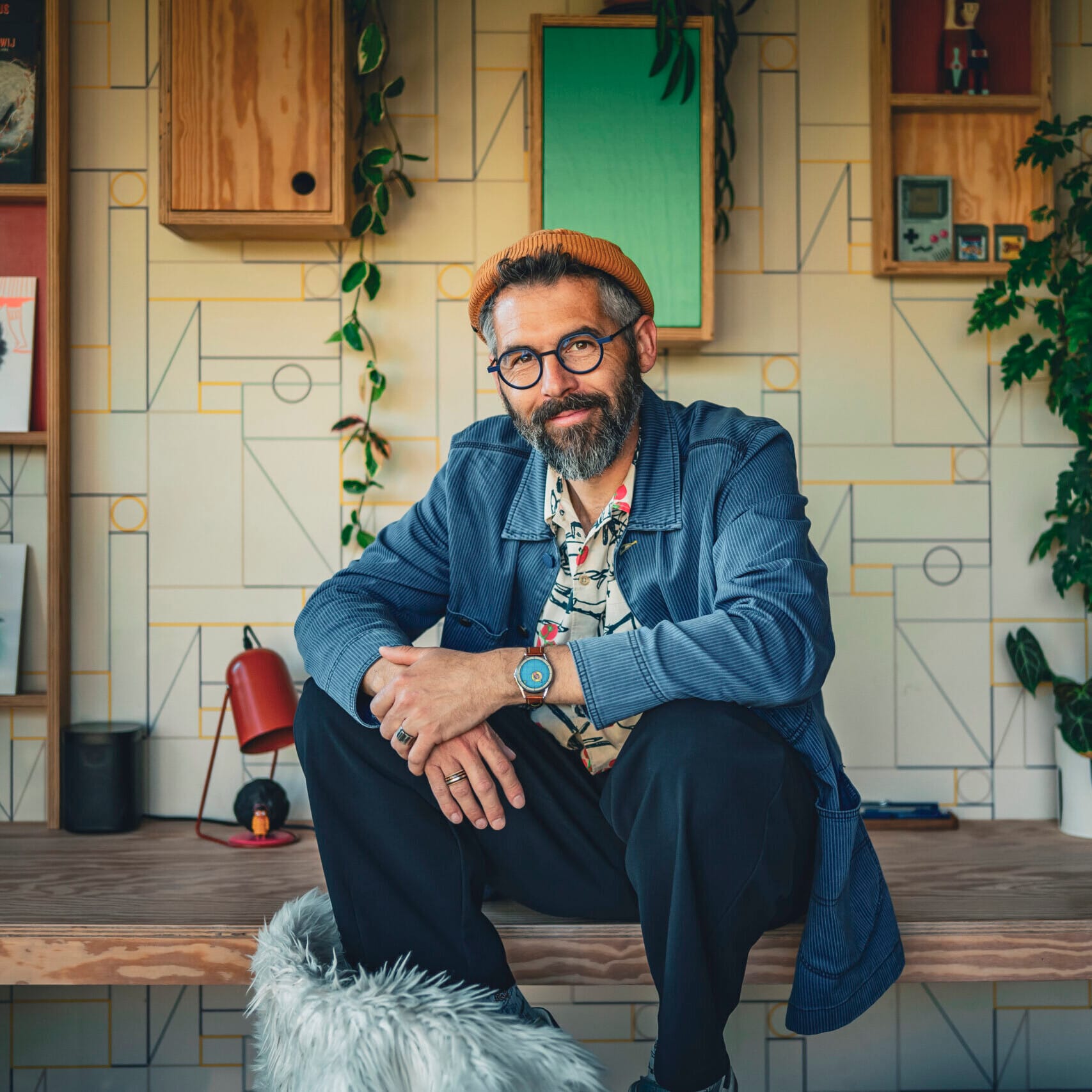
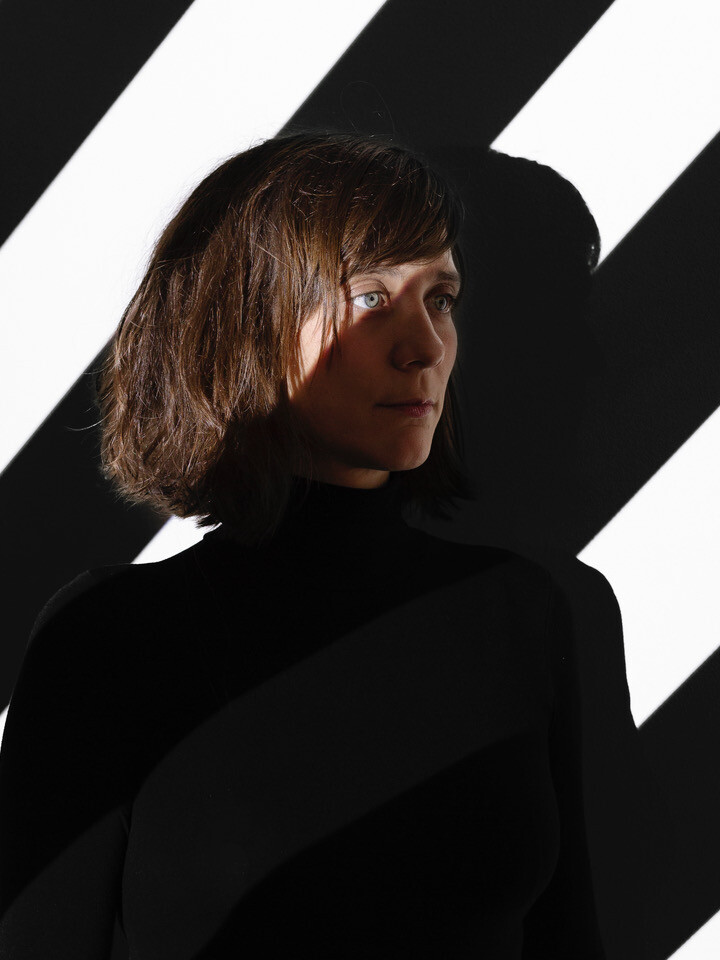
ABOUT PHILIPP LOUVENPhilipp Louven is a graphic designer and creative director based in Düsseldorf, Germany. He is currently lead designer at Kittl, one of Europe's fastest-growing AI-powered design platforms. His background spans print design, editorial work, packaging, branding, and digital design across agencies in Germany and Turkey. He has contributed to multiple book projects with Slanted, one of Germany's leading typography publications.
Tune in wherever you get your podcasts /
Tune in wherever you get your podcasts /





Episode Description
He started with die cuts and packaging catalogues at a small print agency. He co-authored books on typography with Slanted. He moved to Istanbul on a creative whim. And now he’s the lead designer at Kittl — one of Europe’s fastest-growing AI-powered design platforms. The through-line? A deep, stubborn belief that no tool matters if you don’t have the fundamentals first.
Philipp Louven is a designer and creative director based in Düsseldorf, Germany. This conversation covers his journey from traditional print design through editorial work, Istanbul, freelancing, and eventually into the AI-first world of Kittl — along with his honest, nuanced take on what AI actually means for designers, what’s changing in typography in 2026, and why the shift from execution to direction might be the most important move a designer can make right now.
A Traditional Start — and Why That Matters
Philipp’s path into design started where most great designers’ paths start: with drawing. A good art teacher, a growing curiosity about museums and design books, and a decision to pursue a media design apprenticeship with a focus on print.
“I started at a smaller agency and everything at the beginning was print related. We did packaging for bigger food and beverage companies. I did die cuts for packaging, flyers, folders, catalogues for sales agents.”
From there, he studied communication design with a focus on typography, editorial, and print — including a study period in Valencia, Spain. He worked at Slanted, one of Germany’s most respected typography-focused publications, first as an intern and then contributing to several book projects. One of them — Typo Shirt 1 — collected typographic visuals printed on shirts that carried a statement or message. Another was a three-book illustration collection built from an open submission process.
It’s a career foundation that couldn’t be more different from the AI-first environment he works in today. And that, he argues, is exactly the point.
Istanbul, Streetwear, and Moving Towards Digital
Before arriving at Kittl, Philipp made a move that most designers only dream about — he packed up and relocated to Istanbul simply because he was curious about the city.
“I just wanted to be there for a period of my designer time. I was lucky that a brand agency hired me right away.”
The Istanbul agency had a London location and worked across multiple large-scale projects simultaneously — exhibition stands, interior concepts for food and beverage brands — at a pace significantly faster than what he’d experienced in Germany.
“In agencies in Germany, I was much more focused on one specific task or project at a time. In Istanbul, we did not just do one concept — we did 10 concepts at a time.”
Back in Düsseldorf, he joined a brand agency focused on digital brand experience and, in parallel, ran a streetwear label — a combination that pushed him steadily from print into digital, from static to motion, from physical to screen.
Joining Kittl — and the Hard Switch to AI-First
When Philipp joined Kittl, the adjustment wasn’t immediate or easy. As a designer trained to believe that every piece of work needed intention, concept, and a problem to solve, the accessibility and speed of AI felt initially disorienting.
“The value of design gets diluted in a way — everyone can produce pretty nice, high-quality output. This was actually something I needed to get used to.”
But he worked through it. And what he landed on is a position that feels more honest and considered than most of the noise around AI in the design industry right now.
“I see AI as a tool to speed up my workflow and support it — not to cover everything. That was a learning.”
At Kittl, the design team works inside the product every day, actively developing their understanding of prompting, AI direction, and what it means to shift from creating assets to setting direction. Nobody is pretending AI is perfect. Nobody is pretending it’s going away either.
“We are aware that we need to shift from execution to more direction of AI. We work with prompts every day and we know how to use them well. This is super important — and not everyone is doing this.”
The Fundamentals Argument
The most important thing Philipp says in this conversation isn’t about Kittl or AI tools. It’s about what happens when you try to use AI without a foundation.
“You need to have a feeling and a sense of composition, layout, typography — because this is what you direct in the prompt. If you don’t have that knowledge, in my opinion, it can easily become generic and replaceable.”
He’s not arguing that every designer needs 20 years of experience before touching AI. He’s arguing for something more precise: that the craft knowledge underneath design — how to read a composition, how type behaves, what makes a layout work — is now more important than tool proficiency, not less.
This is particularly relevant for younger designers entering the industry right now, who might be tempted to skip the fundamentals entirely and go straight to prompting.
“You don’t need to study for that — if you can do it by yourself with books or whatever, that’s also fine. But you need to have it. And at the end, the tooling doesn’t matter. Find out what works best for you.”
Typography Trends in 2026
As someone who has spent his career steeped in type — from editorial books to packaging to digital platforms — Philipp has a genuinely informed perspective on where typography is going.
The biggest trend he identifies is a reaction to AI itself: a turn towards the human, the imperfect, and the handcrafted.
“Design is shifting from super polished assets towards typography with a visible human touch. Raw feeling — higher contrasts, textures, things that look like they were produced with your printer, cutouts, everything that communicates that typography was crafted with your own hands.”
Alongside this, bold and loud typography is continuing its dominance — minimal type stepping back, type becoming the hero of advertisements, cropped and layered typefaces, expressive colours and strong contrasts.
“Super playful and expressive layered typefaces. Really strong colours and contrasts. Bold, loud, unapologetic.”
Can AI Be More Creative Than Humans?
When asked directly whether AI can be more creative than humans, Philipp doesn’t hesitate.
“When it comes to intention, purpose, and concepts that really solve a problem — at the moment it can’t. It can solve visual direction problems and aesthetics, but the right intention still needs to come from humans. And should.”
He hopes this remains true for a long time. Not out of fear, but because working with intention and concept is the most enjoyable part of design work for him. The part worth protecting.
“I don’t see that changing in the near future, to be honest.”
The Kittl Difference
Philipp describes Kittl’s core USP simply: it’s the only tool that covers the entire creative workflow in one place — from hand-drawn logo to brand assets, from static to motion, without switching between programmes.
“Before, when it came to motion, you needed to step to another programme. When it came to vectorising a logo, you’d start in Illustrator. With Kittl, you can create your entire brand campaign — no matter if static, video, or motion — within one tool.”
He’s straightforward about the fact that even inside Kittl, designers have mixed feelings about AI. It’s not a company full of people who think AI is the best thing that ever happened to design. It’s a company full of people trying to use it thoughtfully, honestly, and in a way that supports rather than replaces.
Key Takeaways
For designers navigating the AI shift: The move from execution to direction isn’t optional — it’s already happening. The designers who will thrive are those who can creatively direct AI, not just use it as a generator. Start developing that skill now.
For young designers just starting out: Don’t skip the fundamentals to chase the tools. Composition, colour, typography, layout — these are what make your AI output not generic. Learn them first, then find the tools that work for you.
For anyone feeling stuck or blocked: Philipp’s approach: step back, don’t start from the last thing you saw, and start from the idea itself. Bring in other perspectives early — colleagues, friends, anyone who can give you a view outside your own head.
For designers worried about AI taking their jobs: Execution is becoming less. Direction is becoming more. The question isn’t whether to use AI — it’s whether you’re developing the skills to direct it well.
For creatives considering a move to a new city: Sometimes the best creative decision is a geographical one. Istanbul taught Philipp a pace and a way of working he wouldn’t have found anywhere else. Curiosity about a place is a valid reason to go.